Why I Still Believe Farming Is One of the Best Businesses in India (Despite the Challenges)
For many people, farming is a profession they want to leave behind. Every year, thousands of young people move from villages to cities in search of better jobs, stable incomes, and new opportunities. When agriculture is discussed in the news, it is often associated with unpredictable weather, rising costs, low profits, and market uncertainty.
I understand these concerns because they are real. Farming is not an easy profession. It demands patience, hard work, and resilience. Nature doesn’t always cooperate, and markets don’t always reward your efforts.
Yet despite all these challenges, I remain optimistic.
I believe farming is still one of the best businesses in India- not because it is easy, but because the opportunities ahead are bigger than ever before.
The agriculture of today is very different from the agriculture of twenty years ago. Technology is transforming farms, consumers are willing to pay more for high-quality food, direct-to-consumer selling is creating new business models, and value-added products are opening entirely new revenue streams.
As someone who practices natural farming, grows kiwi and fresh produce, and has a deep interest in technology, I don’t see agriculture as just crop production. I see it as an industry full of innovation, entrepreneurship, and long-term potential.
Food Demand Will Never Disappear
Unlike many industries that rise and fall with changing trends, agriculture serves one of humanity’s most basic needs – food.
No matter how advanced technology becomes, people will always need fruits, vegetables, grains, and other agricultural products. India’s growing population, rising incomes, and increasing awareness about healthy living continue to create long-term demand for quality food.
At the same time, consumer preferences are changing.
People are becoming more conscious about what they eat. They are asking questions like:
- Where was this food grown?
- Was it produced using excessive chemicals?
- Is it fresh?
- Can I trust the farmer?
This shift is creating tremendous opportunities for farmers who focus on quality rather than simply maximizing production.
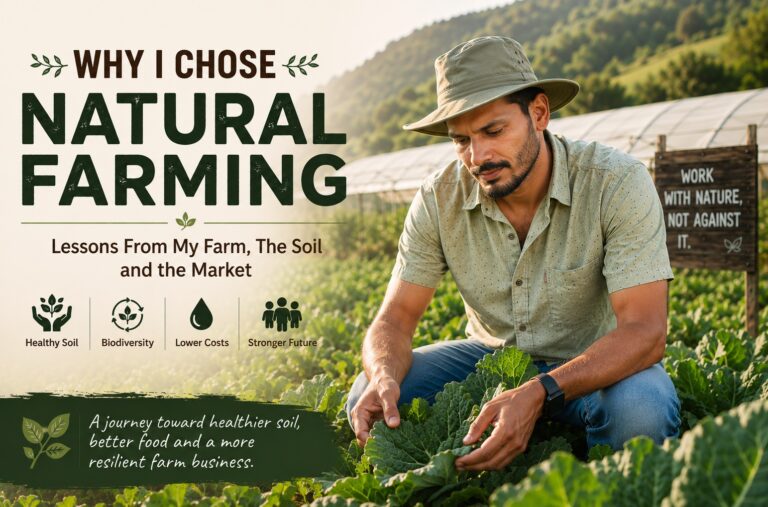
Natural farming, residue-free farming, and premium produce are no longer niche markets. More consumers are actively looking for food they can trust, and many are willing to pay a premium for freshness, transparency, and quality.
Instead of competing only on price, farmers now have the opportunity to compete on value.
Agriculture Is Becoming a Technology Business
When many people imagine farming, they picture traditional methods passed down through generations. While experience remains invaluable, modern agriculture is increasingly becoming a technology-driven business.
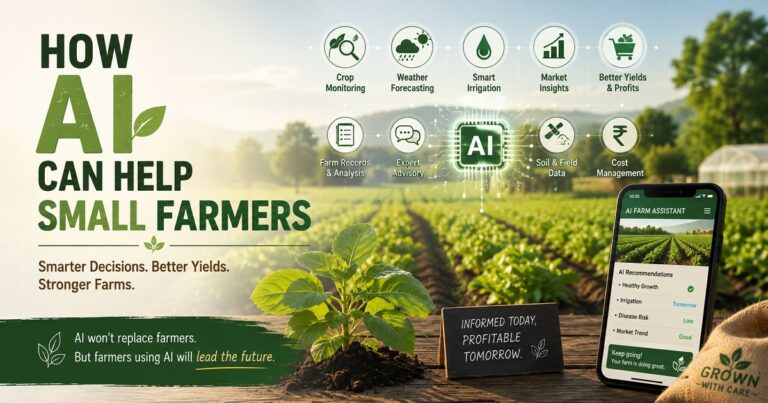
Artificial Intelligence is helping detect crop diseases earlier.
Drones are making field monitoring and spraying more efficient.
IoT sensors allow farmers to monitor soil moisture, temperature, and irrigation requirements in real time.
Weather forecasting tools help farmers make better decisions about irrigation, spraying, and harvesting.
Farm management software enables better planning, record-keeping, and financial management.
Digital marketplaces are connecting farmers directly with buyers across cities and even countries.
Technology cannot eliminate every challenge in agriculture, but it can help farmers make smarter decisions, reduce waste, improve productivity, and manage risks more effectively.
This is one of the reasons I remain passionate about technology.
Alongside farming, I enjoy building digital solutions and exploring how software can simplify agricultural operations. I believe the future belongs to farmers who are willing to combine traditional agricultural knowledge with modern technology.
The best farms of tomorrow will not simply produce crops-they will produce data, insights, and better decisions.
Direct-to-Consumer Is Changing the Economics
For decades, many farmers had only one option: sell their produce through traditional market channels.
While these markets continue to play an important role, today’s farmers have more choices than ever before.
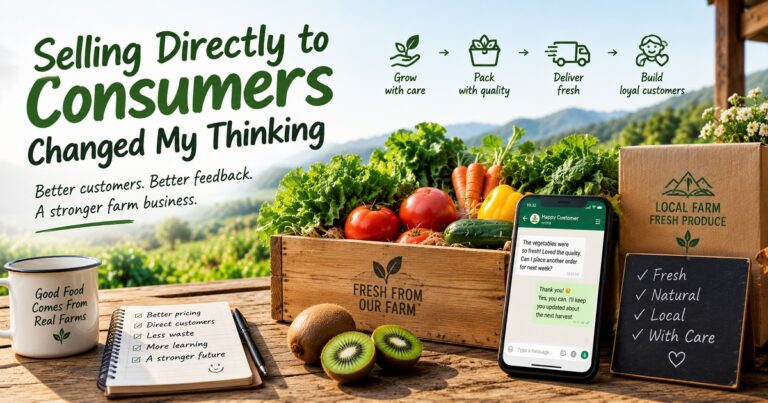
With websites, social media, messaging apps, and digital payments, farmers can now build direct relationships with consumers.
Selling directly to customers offers several advantages.
Farmers can often receive better prices by reducing the number of intermediaries.
Consumers receive fresher produce directly from the source.
Most importantly, farmers begin building something that is far more valuable than a single sale-trust.
Customers who trust a farmer don’t simply buy vegetables or fruits.
They return.
They recommend the farm to others.
They become long-term supporters of the business.
Through my own journey of selling fresh produce directly, I’ve realized that farming is no longer just about growing excellent crops. It is equally about communication, consistency, customer service, and delivering on promises.
Growing food starts the business.
Building relationships sustains it.
Value Addition Creates Bigger Opportunities
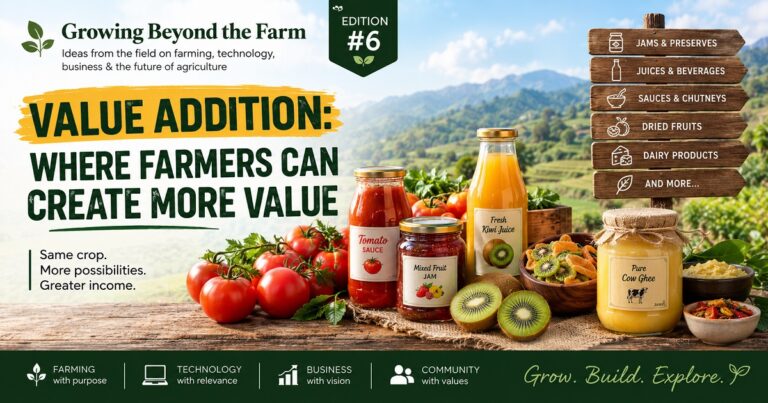
One of the biggest mistakes many farmers make is selling only raw produce.
In many cases, the greatest profits are created after harvesting-not before it.
Consider a few simple examples:
- Fresh kiwi can become premium branded gift boxes.
- Fresh apricots can be processed into dried apricots with a longer shelf life and higher value.
- Tomatoes can become sauces, purees, or ketchup.
- Honey can be branded and packaged for premium markets.
- Traditional pickles can reach customers across India through e-commerce.
- Fresh fruits can be converted into juices, jams, or preserves.
Value addition allows farmers to diversify income, reduce post-harvest losses, improve profitability, and build recognizable brands.
Consumers rarely remember where they purchased loose produce.
But they do remember brands they trust.
This is why branding, packaging, and storytelling are becoming just as important as cultivation itself.
Export Opportunities Are Growing
Indian agriculture has enormous potential beyond domestic markets.
Around the world, consumers are increasingly interested in high-quality fruits, vegetables, spices, and naturally produced food.
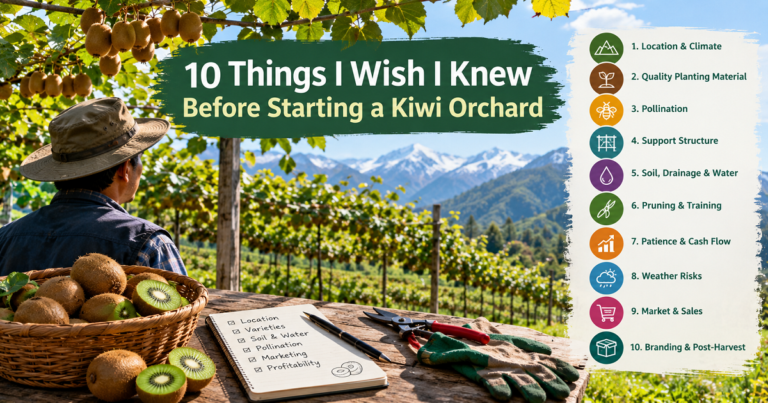
Products such as kiwi, mangoes, pomegranates, grapes, spices, tea, and many processed agricultural products already have strong international demand.
However, exporting successfully requires much more than producing a good crop.
Farmers and agribusinesses must focus on:
- Consistent quality
- Proper grading and sorting
- Modern packaging
- Food safety standards
- Traceability
- Required certifications
- Reliable supply chains
As global consumers become more conscious about where their food comes from, Indian farmers who prioritize quality and transparency can access exciting new opportunities.
Exporting may not be the right path for every farmer, but it demonstrates how agriculture has evolved into a global business.
The Biggest Challenge Isn’t Farming
Many people believe growing crops is the hardest part of agriculture.
In reality, growing crops is only one part of the business.
The bigger challenge often begins after harvest.
How do you market your produce?
How do you transport it efficiently?
How do you reduce spoilage?
How do you build a recognizable brand?
How do you convince customers to buy from you again?
How do you maintain consistent quality every season?
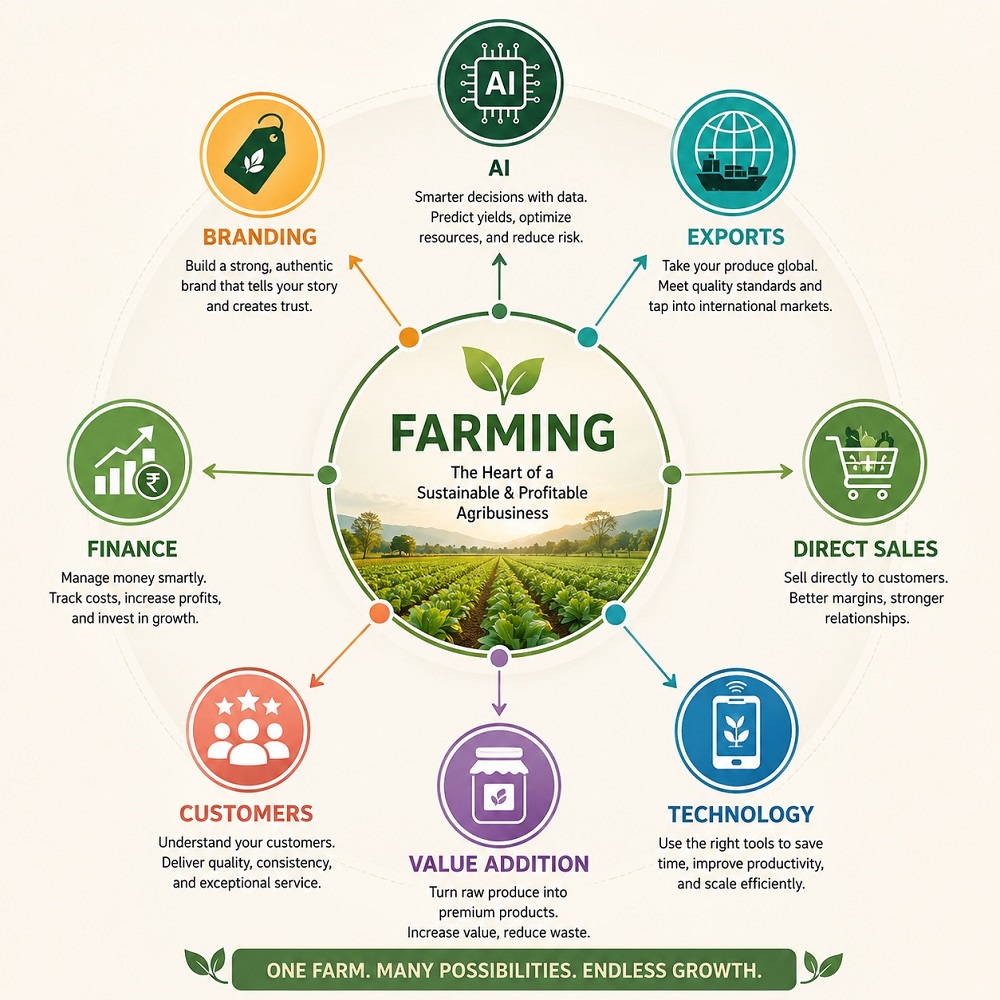
Successful farming today requires thinking like an entrepreneur.
The most profitable agricultural businesses don’t just grow better crops-they build better systems.
They understand logistics.
They understand branding.
They understand customer experience.
They understand finance.
And they continuously improve every part of the business.
What the Next Generation Should Learn
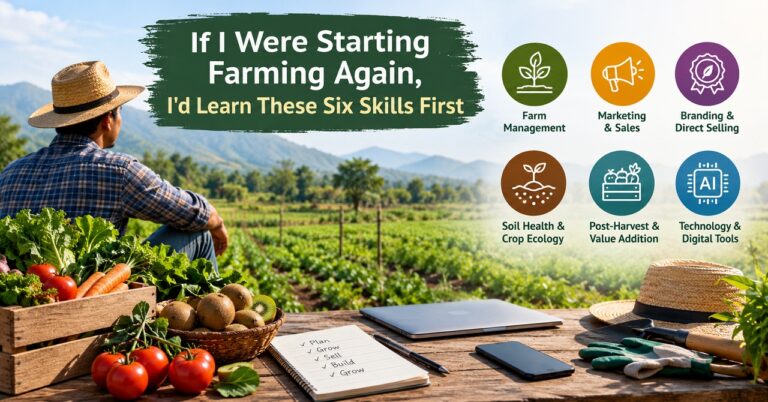
If a young person asked me how to prepare for a career in agriculture, I would encourage them to learn much more than farming techniques.
Learn business because farming is a business.
Learn finance because cash flow determines sustainability.
Learn digital marketing because customers are increasingly online.
Learn technology because modern agriculture depends on data and efficiency.
Learn branding because people buy trust before they buy products.
Learn data analysis because better decisions come from better information.
The farmers who thrive over the next decade will not necessarily be those with the largest landholdings.
They will be those who continue learning, adapting, and embracing change.
My Perspective
I don’t see myself as just a farmer.
I see myself as someone building a modern agricultural business by combining natural farming, technology, and continuous learning.
Every day on the farm teaches me patience, observation, and respect for nature.
Every hour spent exploring technology reminds me that innovation can solve real problems for farmers.
I believe the future of Indian agriculture will belong to people who can bridge these two worlds-those who understand both the soil and the software, both cultivation and customers, both tradition and innovation.
Farming will always have its challenges.
But for those willing to think beyond the field, embrace technology, build trusted brands, and keep learning, I believe agriculture remains one of the most exciting industries in India.
The future of farming isn’t just about producing more food.
It’s about building better agricultural businesses.