If I Were Starting Farming Again, I’d Learn These Six Skills First
If I were starting farming again today, I would still want to understand the soil, the crops, the weather and the land.
But I would not spend all my time learning only how to grow a crop.
I would spend just as much time learning how to run a farming business.
That is one of the biggest changes in how I think about agriculture.
When we enter farming, we naturally focus on production. We want to know which crop to grow, which variety to select, when to plant, how to manage pests and how to increase yield. These are important questions, and no amount of business knowledge can compensate for poor farming practices.
But production is only one part of the equation.
A farmer can grow an excellent crop and still struggle to make a reasonable profit. Another farmer, producing a similar crop, may build a stronger business because they understand costs, customers, marketing, post-harvest management and the opportunities available beyond the farm gate.
As someone interested in natural farming, kiwi cultivation, technology and agricultural businesses, I have increasingly come to believe that the future belongs to farmers who can combine practical farming knowledge with business thinking.
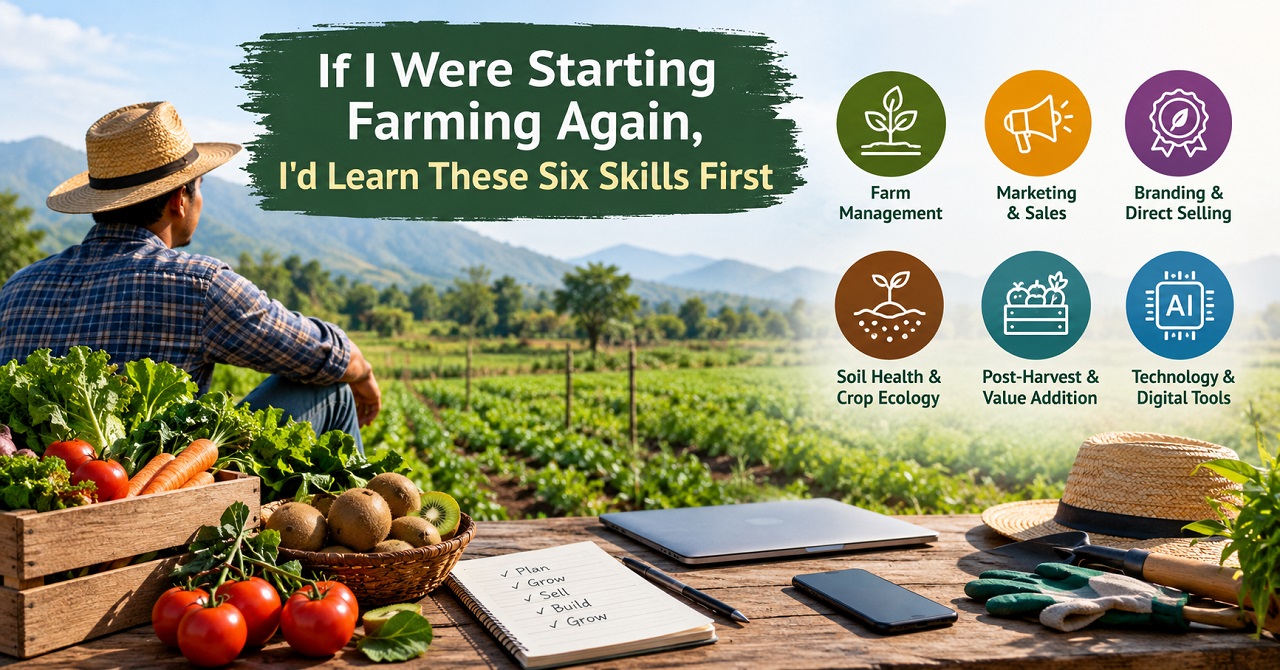
So, if I were starting farming again, I would focus on six skills from the beginning.
Not because these skills guarantee success. Farming will always involve uncertainty, weather risks, market fluctuations and decisions that don’t go as planned.
But because learning these skills early could help me make better decisions, avoid some expensive mistakes and build a farm that is more than just a place where crops grow.
It could become a sustainable business.
1. I Would Learn the Business of Farming, Not Just the Science of Growing
The first skill I would learn is farm business management.
This might sound obvious, but I think it is one of the most overlooked aspects of starting farming.
Imagine you want to grow tomatoes.
You research the variety, prepare the land, arrange irrigation, purchase inputs, manage the crop and eventually harvest a good quantity of tomatoes.
But have you calculated the total cost of producing one kilogram?
Have you included labour, transportation, packaging, equipment depreciation, irrigation, wastage and your own time?
Do you know the minimum price at which you can sell without losing money?
Do you know how much profit you make if the market price falls by 20%?
These questions matter because revenue and profit are not the same thing.
A farmer might generate substantial sales but still have very little left after expenses. Another farmer might produce less but manage costs and selling channels more effectively.
If I were starting again, I would learn to maintain simple farm accounts from the very first season.
I would record:
- Seeds, saplings and planting material
- Fertilisers, soil amendments and other inputs
- Labour and machinery costs
- Irrigation, electricity and fuel
- Harvesting, sorting and packaging
- Transportation and market commissions
- Equipment maintenance and depreciation
- Sales, outstanding payments and unsold produce
I would also separate household expenses from farm expenses as much as possible. Otherwise, it becomes difficult to understand whether the farm is actually profitable.
Learn to calculate the economics before planting
Suppose I am considering a new crop.
Before investing, I would prepare three estimates: an optimistic scenario, a realistic scenario and a difficult-season scenario.
What if the yield is lower than expected?
What if harvesting costs increase?
What if the market price falls just when my crop is ready?
What if a portion of the produce is damaged or remains unsold?
These are not pessimistic questions. They are business questions.
I would also distinguish between cash flow and profit. A farm can look profitable on paper but run short of cash when labour, inputs or transportation need to be paid for before the buyer pays for the produce.
This becomes particularly important when establishing an orchard, where investment may continue for years before the farm generates meaningful commercial returns.
The goal would not be to turn farming into a complicated accounting exercise. I would start with a notebook or spreadsheet and improve the system over time.
If you don’t know your costs, you cannot reliably judge whether your farming decisions are working.
I would learn this skill early because it would influence almost every other decision I made.
2. I Would Learn How to Sell Before I Grew Too Much
The second skill would be marketing and selling.
This is probably the skill I would pay much more attention to if I were starting again.
Farmers naturally think about what they can produce. But a crop becomes a business only when there is a buyer willing to purchase it at an economically viable price.
I would want to understand the market before committing significant money or land to a crop.
Who buys this product?
How much do they purchase?
When is demand strongest?
What quality and size do they require?
How far away are the buyers?
What are the transportation costs?
What happens when supply increases and prices fall?
I would speak to potential buyers rather than relying entirely on assumptions or advice from people who may have different circumstances.
For example, a farmer growing tomatoes might have several potential markets: a wholesale trader, a local retailer, a restaurant, a processor or a direct consumer.
Each buyer has different requirements.
A wholesaler may prioritise volume and speed. A restaurant may need consistent quality and scheduled deliveries. A consumer may value freshness, convenience, trust and easy ordering.
The crop may be the same, but the business model is different.
I would build buyer relationships before harvest
If I expected my crop to be ready in a month, I would start speaking to buyers well before harvesting.
I would ask about their requirements, expected quantities, preferred delivery schedules and payment terms.
I would also explore more than one selling channel instead of depending entirely on a single buyer.
That doesn’t mean I would abandon mandis or assume direct selling is always more profitable. Established wholesale markets can be valuable, particularly when a farmer needs to sell large quantities quickly.
The objective would be to understand my options and choose the channel that makes the most commercial sense.
This is closely connected to what I discussed in Why Selling Produce Is Harder Than Growing It.
The difficulty of selling is not a reason to avoid farming. It is a reason to treat marketing as a core farming skill.
I would learn to communicate value
Selling is not simply announcing that produce is available.
It is explaining what you offer, who it is suitable for and why a buyer should trust you.
For a farm selling directly to consumers, that might involve product photographs, clear descriptions, reliable delivery and honest communication about growing practices.
For a farm supplying businesses, it might involve quotations, specifications, sample batches, invoices and consistent fulfilment.
I would learn these skills before trying to scale production.
My aim would be to understand the market before increasing the quantity I produce.
3. I Would Learn Branding and Direct-to-Consumer Selling
The third skill would be understanding how to differentiate my farm and build relationships with customers.
At first, branding may sound like something meant for large food companies. A small farmer might reasonably wonder why they need a brand when their main job is growing good produce.
But branding is not just a logo, a label or an attractive package.
It is the identity, reputation and trust associated with your product.
Think about two similar boxes of fruit.
One is sold as an anonymous commodity. The other clearly identifies its origin, provides accurate product information, is carefully packed and comes from a producer who communicates consistently.
The second product has an opportunity to build recognition and customer loyalty.
That doesn’t guarantee a higher price. The product still has to meet expectations, and the additional costs must make sense. But it gives the farmer a chance to compete on something beyond price alone.
Start with a clear reason for customers to remember you
If I were building a farm brand, I would first answer a few questions:
- What do I grow?
- Who is most likely to buy it?
- What makes my product relevant to that customer?
- What can I honestly promise?
- How will I demonstrate that promise?
- How can I deliver a consistent experience?
A farmer in Himachal Pradesh, for example, might have a distinctive regional identity. But simply saying that a product comes from the mountains is not enough. Quality, freshness, traceability, packaging and reliable service still matter.
I would avoid making claims that I could not substantiate. If I used terms such as organic or certified organic, I would ensure that the claims were supported by the applicable certification and rules. Farming practices and marketing claims are not automatically interchangeable.
I would also learn the basics of direct-to-consumer sales. This could begin with a small group of customers, a weekly produce box, local deliveries or pre-orders for seasonal fruit.
The purpose would not be to bypass every intermediary. It would be to understand what customers value and whether serving them directly is commercially worthwhile.
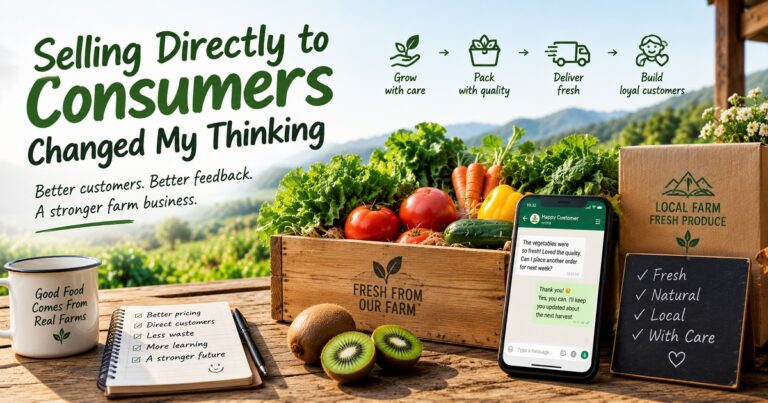
In my article Selling Directly to Consumers Changed My Thinking, I explored how thinking about the customer changes the way a farmer approaches the business.
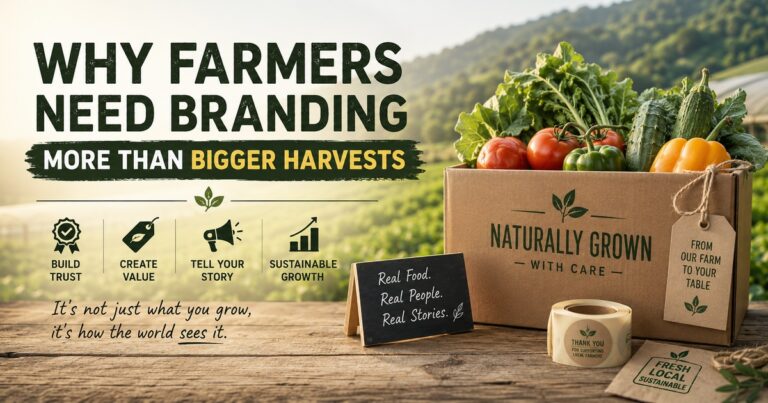
I would combine that thinking with the lessons in Why Farmers Need Branding More Than Bigger Harvests.
A good crop creates an opportunity. A trusted brand can help customers recognise that opportunity and return for it.
4. I Would Learn Soil Health, Crop Ecology and Observation
Business knowledge matters, but farming still begins with the land.
The fourth skill I would prioritise is understanding the soil, plants, local climate and the ecological relationships that influence production.
I would not choose a crop simply because another farmer is earning well from it. Nor would I assume that a crop suitable for one region would perform equally well on my land.
I would learn to observe my farm.
How does water move through the field?
Where does moisture remain after rain?
Which areas dry out quickly?
How does the soil behave during different seasons?
Which pests appear, and when?
How do plants respond to changes in weather, irrigation and management?
What happens to the crop after several seasons under the same practices?
These observations can be more useful than blindly following a standard recommendation.
Understand the conditions of your own farm
Before planting a major crop, I would assess the farm’s elevation, slope, drainage, water availability, soil characteristics and local weather patterns.
Where appropriate, I would use soil testing and advice from agricultural experts to understand limitations and nutrient requirements.
I would also study crop varieties suited to local conditions, likely pest and disease pressures, pollination requirements where relevant, and the practical costs of managing the crop.
For perennial crops such as kiwi, I would be especially careful about site selection. An orchard is a long-term commitment, and decisions about planting material, support structures, drainage, pollination and variety selection can influence performance for many years.
I would learn from experienced growers, but I would also verify advice against reliable local information and observe how it applies to my own land.
I would treat soil health as a long-term investment
My interest in natural farming has reinforced the importance of looking beyond the immediate harvest.
Soil cover, organic matter, crop diversity, water management, biodiversity and careful nutrient management all deserve attention, depending on the farm’s conditions and production system.
But I would avoid treating any farming method as a magic formula. Different crops, soils, climates and management systems produce different results. A practice that works well in one setting may need adaptation in another.
I would evaluate changes through observation, records and, where practical, small trials rather than changing the entire farm at once.
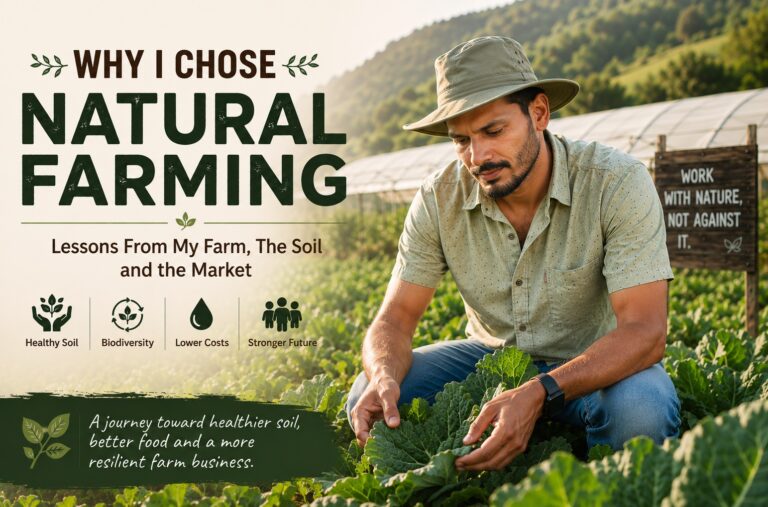
This is why I would read Why I Chose Natural Farming alongside learning conventional agronomy and local crop-management practices.
The objective would be to understand the land well enough to make informed decisions—not simply to follow a label or imitate another farm.
A farmer’s ability to observe, question and adapt is just as important as knowing a particular technique.
5. I Would Learn Post-Harvest Management and Value Addition
The fifth skill would be understanding what happens after the crop is harvested.
This is an area where farmers can lose value without necessarily realising how much is being lost.
A crop may be grown carefully, only to suffer damage during harvesting, sorting, packing, storage or transportation.
Produce can be bruised, mixed with unsuitable grades, exposed to poor storage conditions or delivered too late. In other situations, the farmer may receive a lower price simply because the produce has not been presented in the form the buyer wants.
I would therefore learn the basics of harvesting at the right maturity, careful handling, grading, sorting, packaging, storage and transport for the crops I intended to grow.
The exact practices would depend on the product. Fresh vegetables, kiwi, pulses and processed foods have very different requirements.
I would explore value addition without rushing into a factory
Value addition is another skill I would study early.
It does not necessarily mean buying machinery and establishing a processing unit.
Sometimes it begins with better grading and packaging. In other cases, it may involve drying, preserving, processing or creating a product that is more convenient for the customer.
For example, depending on the crop and available facilities:
- Fresh fruit might be sold in carefully graded packs.
- Suitable apricots could be dried.
- Tomatoes might be sold to a processor or used for products such as puree or sauce.
- Seasonal produce might be sold through planned customer boxes.
- Produce that does not meet fresh-market appearance standards might have a processing opportunity, provided it remains safe and suitable for that purpose.
But I would never assume that processing automatically means more profit.
A processed product introduces additional expenses: ingredients, labour, packaging, testing, storage, compliance, marketing and distribution. The economics must work after all those costs.
Before investing, I would investigate demand, test the idea on a small scale and understand the applicable food-safety and licensing requirements.
I would also look at whether working with an existing processor, shared facility, FPO or FPC would make more sense than owning all the infrastructure myself.
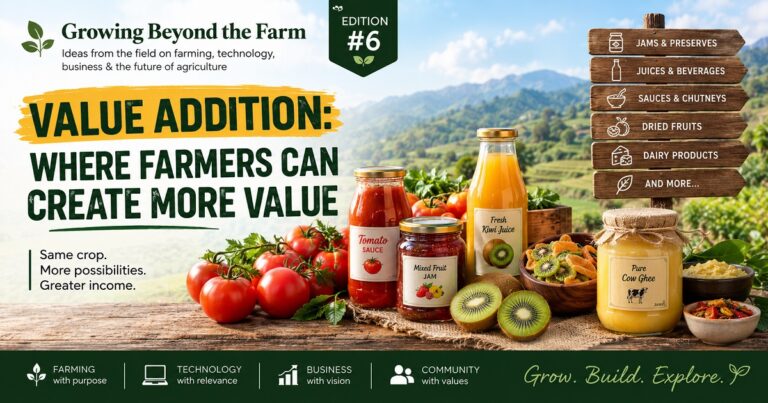
This connects directly with Value Addition: Where Farmers Can Create More Value.
The broader lesson is that a farmer should understand not only how to produce a crop, but also how to preserve its quality and explore different ways of selling it.
The harvest is not the end of the business. It is the point where another set of important decisions begins.
6. I Would Learn to Use Technology and AI as Practical Tools
The sixth skill would be using technology to make better decisions and manage the business more efficiently.
I would not begin by buying expensive equipment or adopting every new application that appears in the market.
I would start by identifying real problems on the farm.
Perhaps I spend too much time organising expenses.
Perhaps I struggle to track customer orders.
Perhaps I need to compare weather information or prepare a crop calendar.
Perhaps I want to understand sales patterns, create product descriptions or communicate with customers in different languages.
These are practical starting points.
Technology becomes useful when it helps solve a real problem rather than simply adding complexity.
I would start with simple digital tools
A smartphone, spreadsheet and basic record-keeping system can already make a difference.
I would use digital tools to maintain records of farm expenses, harvest quantities, sales, customer orders and outstanding payments.
Over time, those records could help answer useful questions.
Which crop has the strongest margins?
Which customers purchase repeatedly?
When do sales increase or decline?
How much produce is being lost?
Which expenses have risen?
What quantity should I plan for the next season?
Good records turn experience into information that can be compared over time.
I would learn how AI can support farm decisions
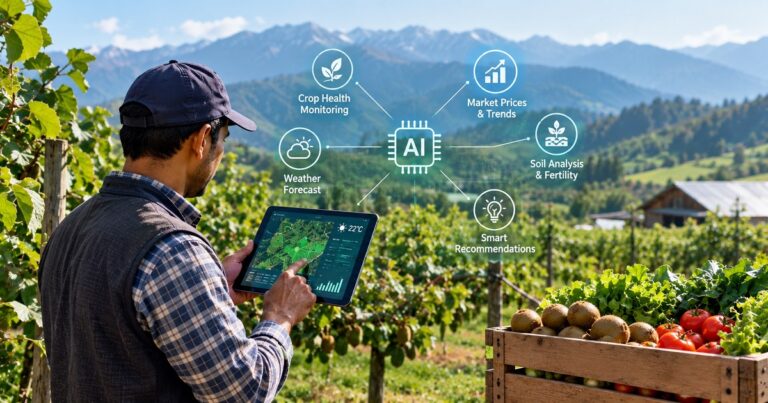
AI can help organise information, explain unfamiliar concepts, draft communications, analyse records and explore possible solutions to problems.
For example, I could ask an AI tool to organise farm expenses into categories or help prepare a checklist for a particular crop stage.
I could use it to draft a message to buyers, compare potential business models or identify questions to ask an agricultural expert.
Image-based tools may also help investigate possible crop or pest problems, but their results need verification. A photograph alone may not provide enough information to diagnose a field problem accurately.
For decisions involving crop protection, chemicals, livestock health, food safety or substantial financial investment, I would consult reliable agricultural sources and qualified professionals rather than blindly following an AI-generated answer.
AI should support my judgment, not replace it.
I have explored this in more detail in How AI Can Help Small Farmers.
I would also pay attention to digital marketing, online ordering and the tools needed to manage direct sales. Technology can help a farm reach customers, but it cannot compensate for poor quality, unreliable delivery or an unclear business model.
The most useful approach would be to start small, evaluate the results and adopt tools that genuinely save time or improve decisions.
A farmer does not need to become a programmer. But learning to use technology intelligently can become a valuable business skill.
These Six Skills Work Better Together
If I were starting farming again, I would not treat these six skills as separate subjects.
They are connected.
Understanding soil and crop ecology helps me produce better-quality crops.
Farm business management helps me understand the actual cost of that production.
Marketing helps me identify the right buyers.
Branding helps me communicate what makes my product different.
Post-harvest management helps me preserve quality and explore value addition.
Technology helps me organise information, learn faster and manage the business more efficiently.
Together, they create a stronger foundation than production knowledge alone.
Consider a farmer growing kiwi.
The farmer needs to understand the orchard, but also the costs of establishing and maintaining it. They need to understand fruit quality, grading, storage and market timing. They need to know who might buy the fruit and what specifications those buyers require. They may eventually explore branding, direct selling or processing, depending on demand and economics.
None of these decisions can be made well in isolation.
That is why I increasingly think about farming as a complete business rather than a single production activity.
I discussed a similar idea in Why I Still Believe Farming Is One of the Best Businesses in India.
The opportunity is not simply to grow a crop successfully. It is to build a business around that crop that can operate sustainably over time.
What I Would Do During My First Year
Learning six skills can sound overwhelming, especially for someone who is new to agriculture.
So I would not try to master everything in the first year.
I would build a practical learning plan around the farm itself.
Before planting
I would study the local climate, soil, water availability, crop suitability and potential markets. I would speak to experienced growers and potential buyers, estimate costs and prepare a realistic budget.
During the growing season
I would maintain basic farm records, observe the crop carefully and learn from reliable local advice. I would document problems and decisions rather than relying entirely on memory.
Before harvest
I would contact buyers, understand their requirements and plan harvesting, sorting, packing and transportation. I would avoid waiting until the produce was ready before thinking about sales.
After harvest
I would compare actual costs and revenue with my original estimates. I would examine what sold well, what was wasted, which decisions worked and what should change next season.
Throughout the year
I would learn one or two digital tools that address real needs. I would also keep improving my understanding of customers, pricing and the business side of farming.
This approach would help me turn every season into a learning opportunity.
Instead of repeating the same mistakes, I could gradually build a better system.
I Would Learn From Other Farmers, But Not Copy Them Blindly
Experienced farmers can teach us things that no book or online course can fully explain.
They understand local conditions, practical challenges, seasonal patterns and the small details that often determine whether a crop succeeds.
I would spend time with farmers who have experience with the crops I wanted to grow.
But I would also ask why they use a particular practice, what it costs, what results they have observed and under which conditions it works.
A practice that works for one farmer may not work for another.
Land, elevation, water, labour availability, capital, market access and management ability can all differ.
I would treat other farmers’ experiences as valuable evidence, not as instructions that must be followed without question.
I would also learn from failure.
If a crop performed poorly, I would try to understand why rather than immediately blaming the weather, the market or a particular input.
Sometimes the problem might be production. Sometimes it might be poor planning, an unsuitable market or a lack of post-harvest preparation.
The more honestly I could evaluate my decisions, the faster I could improve.
I Would Build Slowly Instead of Trying to Scale Too Early
Another thing I would do differently is resist the temptation to expand too quickly.
It is easy to become excited about a new crop, a promising market or a product idea.
But scaling a weak business model can multiply losses just as quickly as it multiplies sales.
I would test ideas on a manageable scale.
If I wanted to try direct selling, I would start with a small customer group.
If I wanted to explore a new crop, I would study its suitability and economics before committing a large area.
If I wanted to process produce, I would investigate demand and use a small trial or an existing processor before investing in machinery.
If I wanted to sell to a larger buyer, I would first understand the required volume, quality, delivery schedule and payment terms.
The goal would be to learn as much as possible without taking unnecessary financial risks.
This does not mean avoiding ambition.
It means building the capability to support that ambition.
Farming Needs a New Kind of Skill Set
I don’t believe farmers need to become experts in everything.
A farmer should not have to be a soil scientist, accountant, marketer, logistics manager, food technologist and software developer all at once.
But farmers should understand enough about these areas to make informed decisions and recognise when specialist help is needed.
They can collaborate with agricultural scientists, accountants, processors, exporters, technology providers and marketing professionals.
Farmer Producer Organisations and Farmer Producer Companies can also help farmers share resources, aggregate produce and access markets that might be difficult to serve individually.
The important thing is to stop thinking that farming knowledge ends with production.
It doesn’t.
Modern agriculture connects land, science, business, technology and customers.
And the farmer who understands these connections may be better positioned to make decisions that improve both the farm and the business.
Final Thoughts
If I were starting farming again, I would still spend time learning how to grow a healthy crop.
That will always be fundamental.
But I would also learn how to calculate costs, understand markets, build customer relationships, protect quality after harvest and use technology to make better decisions.
I would study the soil and the customer with equal seriousness.
I would think about selling before harvesting.
I would investigate value addition before assuming that more production was the answer.
And I would use each season to improve both my farming practices and my business decisions.
Most importantly, I would remember that a successful farm is not measured only by what it produces, but also by how well it turns that production into a sustainable livelihood.
Farming will always involve uncertainty. No list of skills can remove every risk or guarantee a profit.
But the right skills can help us understand those risks, respond to problems and identify opportunities we might otherwise miss.
For anyone considering farming today, my advice would be simple:
Learn the crop. Learn the land. Learn the numbers. Learn the customer. Learn the business.
And remain curious enough to keep learning as agriculture changes.
Because the future of farming will not be shaped only by those who know how to grow more.
It will also be shaped by those who know how to create more value from what they grow.