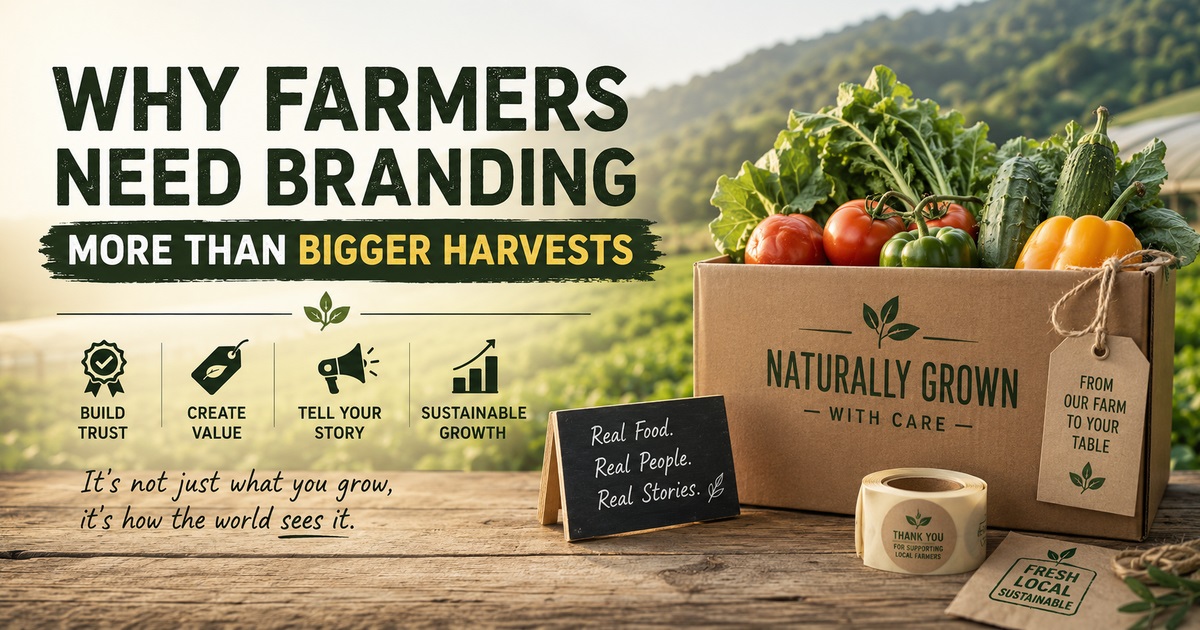
Why Farmers Need Branding More Than Bigger Harvests
There Is a Question Farmers Don’t Ask Enough
For a long time, I thought the most important question in farming was simple:
How much can I produce?
More tomatoes. More kiwi. More vegetables. More yield per acre. Better production. Lower crop losses.
It makes sense. Farming is, after all, a production business.
But the longer I spend around farming, the more I think we have been looking at only half of the business.
A farmer can grow an excellent crop and still struggle to make a good income from it.
Another farmer can grow a similar crop, perhaps even on a smaller scale, but build a recognizable product, develop customer relationships, package it properly, tell its story and sell it into a better market.
The difference is not necessarily the crop.
Sometimes, the difference is how the crop is positioned in the market.
That is where branding comes in.
When I say “branding”, I am not talking about putting a fancy logo on a cardboard box.
I am talking about something much bigger:
What does a customer think about your produce before they buy it?
Where did it come from?
Who grew it?
How was it grown?
Why should I trust it?
Why is it worth paying ₹100 for when another seller is offering something similar for ₹70?
And perhaps the most important question:
Why should I remember this farmer or this product and come back again?
These are branding questions.
And I increasingly believe that farmers need to think about them just as seriously as they think about production.
Growing More Does Not Automatically Mean Earning More
Farmers are constantly encouraged to increase productivity.
And there is nothing wrong with that.
Higher productivity can reduce the cost of production per unit, improve resource efficiency and increase the amount of food available.
But there is a limit to what productivity alone can solve.
Imagine two farmers producing tomatoes.
Farmer A grows 10,000 kg.
Farmer B grows 7,000 kg.
At first glance, Farmer A is clearly doing better.
But suppose Farmer A sells almost everything through a conventional wholesale channel at a price determined largely by the market on that particular day.
Farmer B sells a significant portion through direct customers, restaurants, local retailers or a recognizable farm brand.
Suddenly the comparison becomes much more complicated.
The farmer producing less may actually keep more value from every kilogram.
This is one of the most important lessons I have learned while thinking about farming as a business:
Yield is a production metric. Profit is a business metric.
They are related, but they are not the same thing.
A farmer should therefore ask two different questions:
How can I grow more?
And:
How can I earn more from what I grow?
The second question is where branding, marketing, processing, distribution and customer relationships begin to matter.
A Farmer Usually Sells a Commodity. A Brand Sells a Reason to Choose
There is an important difference between a commodity and a branded product.
If I say “tomato”, the customer has many choices.
Tomato from one farm.
Tomato from another farm.
Tomato from a mandi.
Tomato from a supermarket.
Tomato from a local vendor.
From the customer’s point of view, they may look almost identical.
Price becomes an easy way to make the decision.
But imagine that the same tomato comes with a clear identity.
Perhaps the customer knows:
- which farm it came from
- where that farm is located
- who grows it
- how it is grown
- when it was harvested
- why the farmer follows particular practices
- how the produce reaches the customer
Now the product has context.
The customer isn’t simply buying a tomato.
They are buying a known product from a known source.
That difference can be extremely valuable.
This is particularly important for farmers working with naturally grown, organic or specialty produce.
If your product is genuinely different, but the customer cannot understand or recognize that difference, the market may treat it like an ordinary commodity.
In other words:
If you don’t communicate your difference, the market may not pay for it.
Branding Is Not Just a Logo
This is probably the biggest misunderstanding about agricultural branding.
A farmer may say:
“We already have a logo.”
That’s good.
But a logo is only one small part of a brand.
Your brand is the collection of expectations people associate with your product.
Think about a farmer selling fresh vegetables directly.
The brand might include:
The farm
Where is it?
What is the landscape like?
What kind of farming is practiced?
The farmer
Who is actually behind the produce?
The farming practices
Are crops grown conventionally, naturally, organically or using some specific approach?
The product
What makes the produce different?
Freshness?
Variety?
Taste?
Harvest timing?
Local adaptation?
The experience
How is the produce packed?
How quickly does it arrive?
Does the customer receive what was promised?
The communication
Does the farmer explain honestly what they do?
The consistency
Does the customer receive a similar level of quality next time?
All of these things contribute to the brand.
So when I think about branding for farmers, I don’t start with:
“What logo should I design?”
I start with:
“What should a customer remember about my farm?”
Trust May Be the Most Valuable Thing a Farmer Can Build
Food is different from many other products.
When someone buys a phone, they can compare specifications.
When someone buys a tractor, they can compare horsepower, features and warranty.
But when someone buys food, there is something much more difficult to evaluate:
What happened before this food reached me?
The customer usually cannot see the field.
They don’t see the soil.
They don’t see the irrigation.
They don’t see what happened during cultivation.
They don’t know when the produce was harvested.
That creates an information gap.
A strong agricultural brand can help reduce that gap.
Not by making exaggerated claims.
Not by putting “100% chemical-free” on everything.
Not by using green leaves and pictures of mountains to create an artificial impression.
But by providing evidence, transparency and consistency.
Show the farm.
Show the crops.
Explain the practices.
Talk about what you actually do.
If something is certified, explain the certification.
If it isn’t certified, don’t pretend that it is.
If you follow natural farming practices, explain them honestly. I have also shared my experience with natural farming here.
This is particularly important because terms such as “natural”, “organic”, “chemical-free” and “residue-free” can mean very different things in the marketplace and under different regulatory frameworks.
A brand should not create a story that is bigger than reality.
The story should come from the farm.
This Is Where My Own Thinking About Farming Changed
My interest in technology has influenced the way I look at agriculture.
I don’t see farming and technology as two separate worlds.
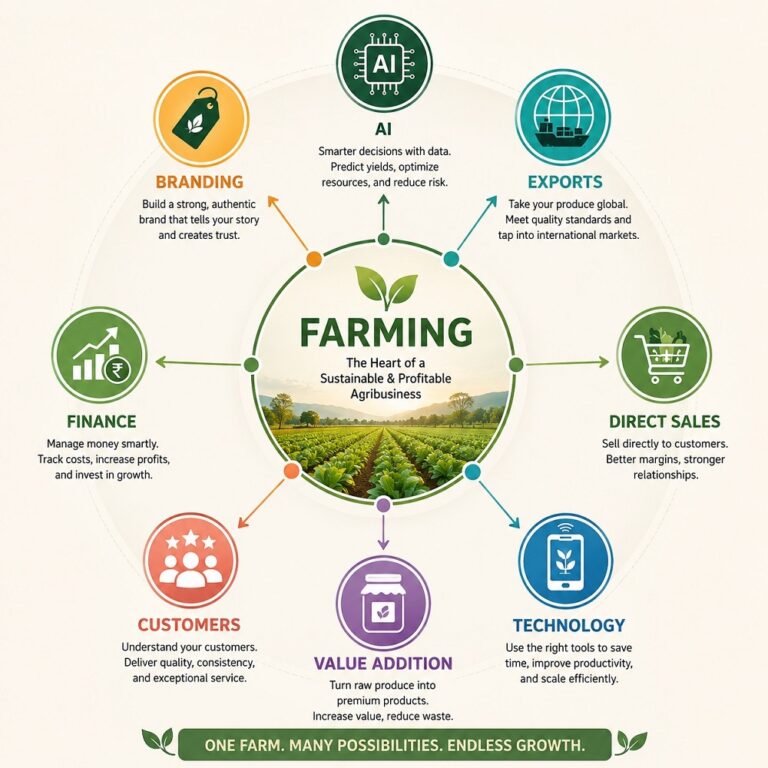
Technology can help us improve production, collect information, manage operations and reach customers.
But technology alone doesn’t create trust.
A website does not automatically create a brand.
An Instagram page does not automatically create a brand.
A beautiful photograph of vegetables does not automatically create a brand.
The real question is what exists behind those digital tools.
For me, this is where the idea of building a farm brand became interesting.
I started looking at the farm not only as a place where crops are produced, but also as the source of a story.
The orchard has a story.
The vegetables have a story.
The location has a story.
Natural farming has a story.
The farmer has a story.
And technology gives us new ways to communicate that story.
A website can show where the produce comes from.
Social media can show the actual farm.
A simple WhatsApp conversation can build a relationship with a customer.
Digital payments can make transactions easier.
An order system can help manage demand.
Customer data can tell us which products people actually want.
None of these replaces farming.
They simply allow the farmer to participate in more parts of the value chain.
The Farmer’s Story Can Become an Economic Asset
This idea may sound strange at first.
How can a story have economic value?
Because consumers don’t always make food decisions based only on physical characteristics.
Consider two packets of dried apricots.
Both may contain good-quality fruit.
One packet simply says:
DRIED APRICOTS – 500g
The other says:
Himalayan Dried Apricots
It explains the growing region, introduces the farm or producer, describes the drying process and provides transparent information about the product.
The actual fruit still needs to be good.
But now the customer has context.
The product has identity.
That identity can influence perceived value.
This is why branding becomes especially interesting when farmers move toward:
- specialty crops
- naturally grown produce
- regional products
- traditional foods
- processed foods
- premium fruits
- farm-direct products
- gift boxes
- traceable products
These categories give farmers more opportunities to differentiate.
Branding Can Help Farmers Escape the Pure Price Game
One of the biggest problems with commodity markets is that the farmer often has very little control over the final selling price.
If ten farmers bring similar tomatoes to the same market on the same day, the product is largely interchangeable.
The buyer has little reason to pay significantly more for one farmer’s tomatoes.
The farmer therefore competes primarily on price.
Branding does not magically remove market forces.
But it can create differentiation.
Instead of competing only on:
“My tomato is ₹X per kilogram.”
you can begin competing on:
“This is the product I know and trust.”
That is a completely different relationship.
It doesn’t mean every customer will pay more.
And it doesn’t mean every farm should become a premium brand.
But it creates another route to market.
For farmers who have something genuinely different to offer, that route can be extremely valuable.
Direct-to-Consumer Farming Makes Branding Even More Important
This is something I have experienced personally while thinking about selling fresh produce directly.
When you sell through a traditional chain, several intermediaries may stand between you and the final consumer.
The consumer may never know your name.
They may not know your farm.
They may not know how the crop was grown.
And you may not know who ultimately ate your produce.
Direct selling changes that relationship.
Suddenly, the customer can ask:
“Where is this from?”
“When was it harvested?”
“How do you grow it?”
“Do you have kiwi?”
“Can I order vegetables next week?”
Those conversations are not just customer-service interactions.
They are the beginning of a relationship.
And relationships are one of the strongest foundations of a brand.
A customer who trusts you can become a repeat customer.
A repeat customer can recommend you to someone else.
That person can become another customer.
Over time, the farmer is no longer selling only produce.
The farmer is building a customer base.
That is a very different agricultural asset from a harvest.
A harvest disappears when it is sold.
A loyal customer can remain for years.
A Brand Can Also Make Small Farms Look Bigger Than Their Physical Size
I don’t mean pretending to be something you aren’t.
I mean that digital tools have reduced the importance of physical scale in certain areas of business.
A small farm can have:
- a professional website
- a recognizable name
- good photography
- social media presence
- transparent farming information
- online ordering
- customer reviews
- farm stories
- educational content
A customer sitting in Chandigarh, Delhi or another city does not necessarily care whether the farm has 5 acres or 500 acres.
They care about whether they trust the product.
This creates an interesting opportunity for small farmers.
Scale of production and scale of brand are not necessarily the same thing.
A small farm can build a strong niche.
A group of farmers can build a collective brand.
A Farmer Producer Company can bring production from many farmers under a common identity while maintaining systems for quality and traceability.
That is where branding can become much more than an individual farmer’s marketing exercise.
It can become part of a broader agricultural business model.
Value Addition Is Where Branding Becomes Even More Powerful
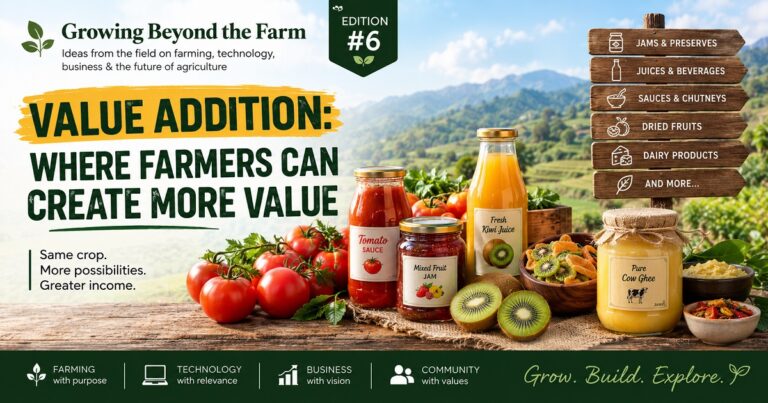
Suppose you grow tomatoes.
You can sell fresh tomatoes.
But you can also potentially create products such as:
- tomato sauce
- puree
- chutney
- dried tomatoes
- cooking bases
- other processed products
Now you are no longer selling only raw agricultural produce.
You are selling a product.
And products can be branded.
The same principle applies to many crops.
Fresh apricots can become dried apricots.
Fruit can become juice or preserves.
Milk can become ghee or other dairy products.
Spices can become blended products.
A farm can create gift boxes.
A group of farmers can create regional specialty products.
The possibilities depend on the crop, processing requirements, food-safety regulations, economics and market demand.
But the fundamental principle remains:
Value doesn’t necessarily end at harvest.
India’s Ministry of Food Processing Industries specifically identifies post-harvest losses and insufficient processing as important challenges, while noting that greater processing can add value to agricultural produce and improve remuneration and employment opportunities.
And India’s agricultural export strategy also emphasizes value addition, processing, market access and improving farmer realization.
That tells us something important.
The shift from “grow more” to “create more value from what we grow” isn’t just a marketing idea.
It is part of a much larger transformation happening across agriculture.
Packaging Is Part of the Brand Too
Farmers sometimes treat packaging as an expense.
I understand why.
When margins are already tight, spending money on boxes, labels, printed material or better presentation can feel unnecessary.
But packaging is also communication.
Before a customer tastes your product, they see it.
A well-designed package can communicate:
- quality
- cleanliness
- origin
- care
- professionalism
- product information
- trust
This does not mean packaging should become expensive for the sake of appearance.
In fact, excessive packaging can create its own problems.
The goal should be appropriate packaging that protects the product and communicates its value.
For a premium product, the packaging may be part of the customer’s experience.
For fresh vegetables, freshness and practical delivery may matter much more than elaborate packaging.
Branding should follow the product and the customer—not the other way around.
Your Farm’s Location Can Become Part of Your Identity
This is particularly relevant to farmers in places like Himachal Pradesh.
A location is not automatically a brand.
But it can become part of one.
Himalayan agriculture has a powerful story when it is communicated honestly.
Mountain landscapes.
Different elevations.
Traditional knowledge.
Unique growing conditions.
Local crops.
Orchards.
Small farms.
Distinctive food products.
These can all contribute to product identity.
But I don’t believe farmers should simply put the word “Himalayan” on a label and assume that customers will pay more.
The product still has to deliver.
The story should be supported by reality.
That is the principle I would apply to my own farm as well.
The place should strengthen the product—not compensate for a weak product.
Branding Does Not Mean Pretending Your Produce Is Perfect
This is another lesson I think farmers need to hear.
A brand should not hide reality.
If a farmer has a small farm, say it.
If the produce is seasonal, explain it.
If some vegetables have unusual shapes, don’t automatically treat that as a failure.
If production is limited, communicate that.
If weather affected the crop, customers may appreciate knowing.
Agriculture is unpredictable.
A perfectly polished brand that pretends farming is always perfect can actually become less believable.
I would rather see a farm communicate:
“This week’s harvest is smaller because of the weather, but here is what we have.”
than create the impression that everything is always abundant.
Authenticity can become a competitive advantage.
Because customers are increasingly able to see behind the marketing.
Branding Is Also About Consistency
One good delivery does not create a brand.
One beautiful Instagram post does not create a brand.
One excellent harvest does not create a brand.
Consistency does.
If a customer receives excellent produce this week and poor-quality produce next week, trust begins to disappear.
If your packaging looks professional but the product arrives damaged, the packaging has failed.
If you say the produce is freshly harvested but customers repeatedly receive older produce, the story loses credibility.
If you claim natural farming but cannot explain your practices, people may become skeptical.
This is why I think branding ultimately comes back to farming itself.
Marketing can attract the first customer. The product and experience have to earn the second purchase.
That is why I don’t see branding as something separate from farming.
It starts in the field.
The Real Brand Is Built Before the Customer Sees the Product
A farmer might think:
“I need to hire someone for social media.”
Maybe.
But before that, ask:
Do I know my customer?
Do I know what they value?
Do I know what makes my product different?
Can I explain my farming practices clearly?
Can I maintain consistent quality?
Can I deliver reliably?
Can I trace where the product came from?
Can I calculate my real cost?
Can I make a reasonable margin?
Can I handle customer complaints?
Can I supply enough if demand increases?
These are not branding questions in the traditional sense.
But they determine whether your brand will survive.
A logo cannot fix bad logistics.
An Instagram page cannot fix inconsistent quality.
A beautiful website cannot fix poor economics.
Branding is the visible layer of a much deeper business.
Technology Can Make Agricultural Branding More Powerful
This is where my technology side naturally comes into the picture.
A farmer today has tools that previous generations simply didn’t have.
A smartphone can document the farm.
A website can tell the farm’s story.
A QR code can potentially connect a product to information about its origin.
Digital records can improve traceability.
Customer databases can help understand buying patterns.
Online marketplaces can expand reach.
Social media can create direct communication.
Data can help identify which products are selling and when.
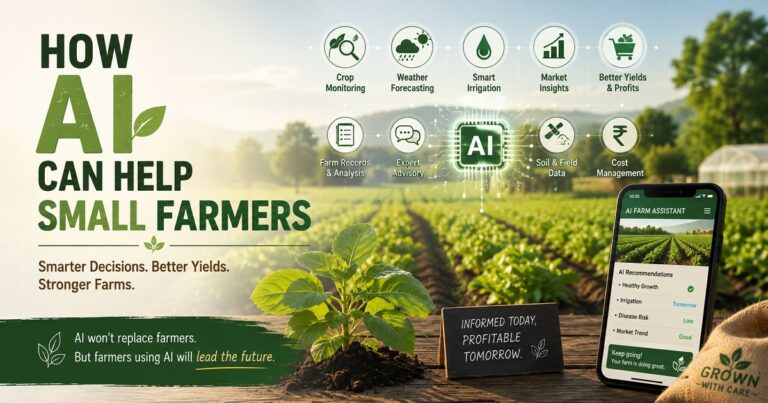
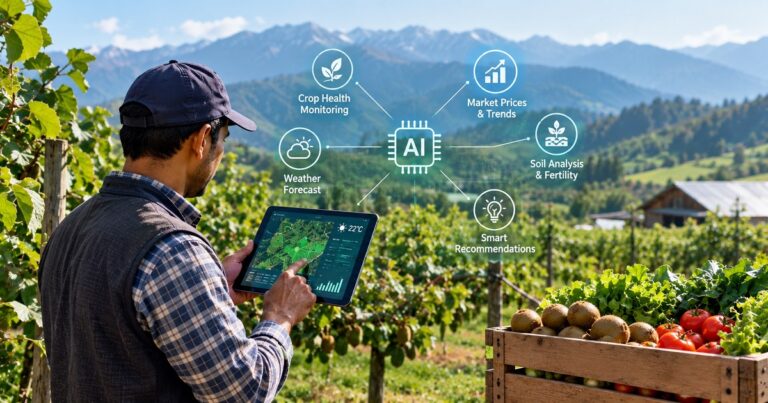
Artificial intelligence can increasingly help with content, customer communication, market research and business analysis.
None of this replaces agricultural knowledge.
But it changes the farmer’s ability to participate in the market.
This is one reason I believe the modern farmer needs to become more comfortable with technology.
Not because every farmer needs to become a programmer.
But because information is becoming part of agricultural value.
APEDA’s current initiatives around agri-food exports explicitly include digital marketplaces, traceability, IoT monitoring, digitized quality control, packaging innovation and post-harvest technologies.
That is a strong indication of where agricultural value chains are heading.
Branding Becomes Even More Important When You Think About Export
Export markets are not simply about producing more.
They involve quality, consistency, traceability, packaging, compliance, market access and buyer confidence.
APEDA’s current export ecosystem work places significant emphasis on high-value and value-added products, branding, quality assurance, traceability and global market requirements.
For a farmer, this changes the way we should think about competition.
The question isn’t only:
“Can India grow this product?”
India already produces enormous quantities of agricultural commodities.
The more interesting question is:
Can we create products that customers in India and around the world specifically want to buy?
That requires moving from production thinking toward product thinking.
And product thinking naturally leads to branding.
A Farmer Should Know What the Customer Is Actually Buying
This may sound obvious, but it is easy to forget.
The farmer thinks about the crop.
The customer thinks about the outcome.
The farmer thinks:
“These are good tomatoes.”
The customer might think:
“I want tomatoes that taste good in my cooking.”
The farmer thinks:
“This is naturally grown.”
The customer might think:
“I want food I can trust.”
The farmer thinks:
“I have fresh kiwi.”
The customer might think:
“I want premium fruit as a gift.”
These are different perspectives.
The strongest brands understand the second perspective.
They don’t stop at:
What do we produce?
They ask:
Why does someone want it?
That is a powerful question for any farmer who wants to move beyond commodity markets.
Bigger Harvests Still Matter
I want to make one thing clear.
I am not arguing that farmers should stop trying to improve productivity.
We need productive farms.
We need efficient irrigation.
We need better varieties.
We need good soil management.
We need scientific knowledge.
We need appropriate technology.
We need to reduce crop losses.
We need efficient logistics.
A farmer cannot build a successful brand around a product that doesn’t exist in sufficient quantity or quality.
Production remains the foundation.
My argument is simply that production should not be the entire strategy.
Think of the farm business as a chain:
Soil → Crop → Harvest → Quality → Processing → Packaging → Brand → Market → Customer → Repeat Purchase
If we focus entirely on the first few steps, we leave much of the potential value to someone else.
What I Would Tell a Farmer Starting Today
If someone asked me how they should begin building a farm brand, I wouldn’t tell them to spend a large amount of money on a logo.
I’d suggest starting much closer to the farm.
First, decide what you want to be known for
Maybe it is naturally grown vegetables.
Maybe it is kiwi.
Maybe it is a particular regional product.
Maybe it is traditional food.
Maybe it is premium fruit.
Maybe it is trustworthy farm-direct produce.
You don’t need to sell everything to everyone.
Second, understand your customer
Who are you selling to?
A local family?
Urban consumers?
Restaurants?
Retailers?
Hotels?
Health-conscious consumers?
Export buyers?
Different customers value different things.
Third, document your work
Take photographs.
Record harvest dates.
Document farming practices.
Keep production records.
Track varieties.
Record customer feedback.
Over time, these records become useful business assets.
Fourth, build a simple digital presence
You don’t need a complicated website on day one.
But have a place where people can understand:
Who you are.
Where you farm.
What you grow.
How you farm.
What you sell.
How they can contact or buy from you.
Fifth, focus on product quality
This sounds obvious, but it is where many brands fail.
Don’t spend ₹1 lakh on branding and then compromise on the product.
The product is the brand.
Sixth, create a recognizable experience
Your name.
Your packaging.
Your communication.
Your photographs.
Your tone.
Your delivery.
Your customer service.
All of these should feel connected.
Finally, keep learning
Branding is not a one-time project.
Your customers will change.
Markets will change.
Technology will change.
Your products will change.
Your farm will change.
Your brand should evolve with them.
I Am Still Learning This Myself
I don’t want to write this as if I have already figured everything out.
I haven’t.
I am still experimenting with farming, technology, direct selling and building an identity around agricultural work.
That is actually why this subject interests me.
I have seen how different the economics can feel when you move from simply producing something to thinking about who will buy it, why they will buy it and how you can reach them directly.
Working on farm-related digital projects has also changed the way I look at agriculture.
Earlier, I might have thought about a crop primarily in terms of production.
Now I increasingly think about the entire chain.
Who is the customer?
What problem are we solving for them?
What makes this product different?
How can we communicate that difference honestly?
How can technology make the process easier?
How can the farmer keep more of the value?
Those questions are changing the way I think about farming.
The Future Farmer May Need to Think Like a Brand Builder
I don’t think every farmer needs to become a marketer.
But I do think more farmers will need to understand marketing.
The farmer of the future may need to understand at least the basics of:
- branding
- customer behavior
- digital marketing
- packaging
- finance
- data
- logistics
- food processing
- quality management
- direct sales
And this does not mean abandoning traditional farming knowledge.
Quite the opposite.
The opportunity is to combine the two.
Deep knowledge of the farm + understanding of the market + appropriate technology.
That combination is powerful.
Perhaps the Real Goal Isn’t to Sell More Produce
Maybe the goal should be to create more value from every unit of produce we grow.
That could mean:
selling directly,
processing surplus,
building a premium product,
creating a recognizable regional identity,
developing repeat customers,
reducing post-harvest losses,
improving packaging,
entering new markets,
or building a collective brand through an FPO or Farmer Producer Company.
The possibilities are different for every farm.
But the principle remains the same.
If the farmer only participates in production, someone else may capture much of the value created after harvest.
If the farmer participates in production and value creation, the economics can change.
Branding Should Begin With a Good Farm, Not Hide a Bad One
There is one principle I want to keep coming back to.
Branding cannot replace good farming.
It can amplify it.
If your produce is poor, branding may help you sell it once.
It won’t build a lasting business.
If your claims are exaggerated, customers will eventually notice.
If your quality is inconsistent, your reputation will suffer.
If your delivery is unreliable, customers will move elsewhere.
But if you have a genuinely good product, a transparent story and the discipline to deliver consistently, branding can help more people discover it.
That is where I see the opportunity.
Not in making farming look glamorous.
Not in turning every farm into an Instagram brand.
But in helping farmers capture more of the value they are already creating.
I Don’t Want to Grow More Just for the Sake of Growing More
This is probably the biggest change in my own thinking.
Of course I want productive crops.
Of course I want healthy plants and good harvests.
But I increasingly want to ask a bigger question:
What happens after I harvest?
Who buys it?
Where does it go?
How much value is added?
How much of the final price reaches the farmer?
Can I build a relationship with the customer?
Can I turn part of the crop into a higher-value product?
Can I build something that customers recognize and trust?
Can I create a business that is not completely dependent on the price offered for a commodity on one particular day?
These questions have made me look at farming differently.
And perhaps that is why I believe farmers need branding more than we sometimes realize.
The Farmer’s Name Can Be Worth Something
For generations, farmers have often remained invisible behind the food system.
The consumer knows the retailer.
They know the supermarket.
They know the packaged-food company.
They know the restaurant.
But they rarely know the farmer.
I think that can change.
A farmer’s name can become associated with quality.
A farm can become recognizable.
A region can become known for a product.
A Farmer Producer Company can create a collective identity.
A natural farming practice can become part of a transparent product story.
Technology makes this much more possible than it was before.
And I find that possibility exciting.
Because ultimately, branding is not really about making a farmer famous.
It is about making the source of food visible and valuable.
My Takeaway
I still believe farmers should focus on the fundamentals.
Healthy soil.
Good crops.
Good varieties.
Water management.
Crop planning.
Scientific knowledge.
Hard work.
But I no longer think the job ends at the farm gate.
The modern agricultural business has another half.
Find the customer.
Create the product.
Communicate its value.
Build trust.
Deliver consistently.
Keep the customer coming back.
That is where branding becomes important.
A bigger harvest gives you more to sell.
A stronger brand can give people a reason to choose your harvest.
And in a world where consumers have more choices than ever, that distinction matters.
I don’t think the future of farming is simply about growing more.
I think it is about growing better, understanding the customer better, creating more value, and keeping more of that value with the farmer.
For me, that is where natural farming, technology and entrepreneurship begin to meet.
And perhaps the most important shift is this:
Don’t ask only, “How much can I grow?”
Ask, “How much value can I create from what I grow?”
That is a question I want to keep exploring through my own farming journey.