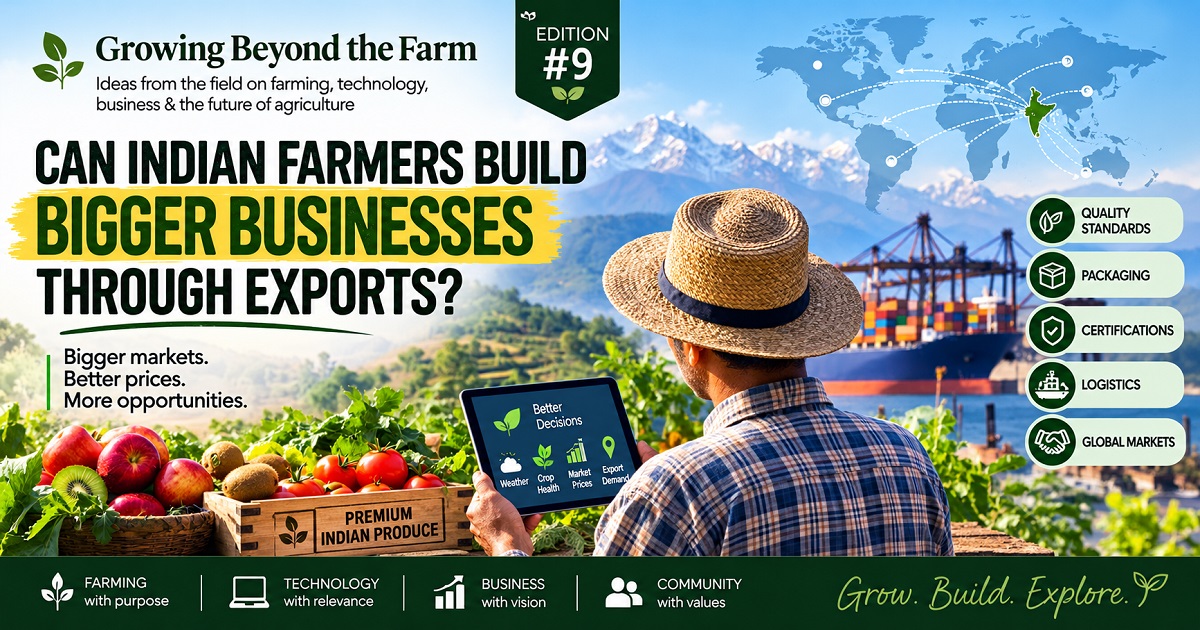
Can Indian Farmers Build Bigger Businesses Through Exports?
For many Indian farmers, the biggest question is not whether they can grow more.
It is whether they can sell what they grow at a better value.
We often talk about increasing farm productivity, improving irrigation, using better varieties, adopting technology and reducing production costs. All of these matter. But there is another side of agriculture that deserves much more attention: markets beyond our own borders.
India already exports agricultural and processed food products to more than 200 countries and regions. In 2024–25, agricultural products accounted for about US$51.91 billion of India’s merchandise exports, while products monitored by APEDA were worth about US$27.90 billion.
And this is not limited to rice, spices or large commodity businesses.
Indian farmers and farmer organisations are already participating in exports of fruits, vegetables, processed foods, pulses, dairy products, organic products and many other categories.
So I keep coming back to a question:
Can Indian farmers build significantly bigger businesses by thinking beyond the domestic market and looking at exports?
I believe the answer is yes.
But I don’t think exporting simply means finding a foreign buyer and sending a truck of produce to another country.
Export agriculture requires a completely different mindset.
It requires consistency, quality, grading, packaging, traceability, logistics, documentation, compliance and, most importantly, understanding what the customer in another market actually wants.
That is where I think the real opportunity lies.
India Has a Huge Agricultural Advantage
India has something that very few countries can match: agricultural diversity at scale.
We have different climates, elevations, soils and growing conditions across the country.
Farmers grow everything from tropical fruits and vegetables to temperate fruits, spices, grains, pulses, medicinal plants and specialty products.
This diversity gives Indian agriculture an enormous advantage when it comes to serving different markets.
According to APEDA, India exported about US$2.17 billion of fresh fruits and vegetables in 2025–26, including around US$1.32 billion of fresh fruits and US$846.84 million of fresh vegetables.
The opportunity becomes even more interesting when we look at processed products.
In 2025–26, processed fruits, juices and nuts alone accounted for about US$662.79 million of exports. Processed fruits and vegetables together represent a much larger opportunity.
These numbers tell me something important.
The international market is not a future possibility for Indian agriculture. It already exists.
The question is how many farmers can move higher up the value chain and participate in it.
But Exporting Is Not Simply “Selling Abroad”
There is a tendency to romanticise exports.
We imagine a farmer growing a good crop, finding an overseas buyer and suddenly earning much more money.
Reality is considerably more complicated.
A foreign buyer generally doesn’t want to hear only:
“My farm produces excellent apples.”
They want to know things like:
- What variety?
- What grade?
- What size?
- What quantity?
- What is the harvest window?
- What are the residue levels?
- How is the produce sorted?
- How is it packed?
- What is the shelf life?
- How will it be transported?
- Is there traceability?
- What certifications are available?
- Can you supply consistently?
- What happens if quality doesn’t meet specifications?
That is a very different way of thinking about farming.
And perhaps that is exactly why exports can create bigger agricultural businesses.
Because exporting forces us to treat farming not simply as production, but as a business system.
The Biggest Shift: From Growing a Crop to Building a Supply Chain
This is something I have increasingly realised through my own experience in farming.
When you are focused only on production, your thinking tends to revolve around questions such as:
How much can I produce?
How can I increase yield?
How can I reduce input costs?
When should I harvest?
But once you start thinking about markets, the questions change.
You begin asking:
Who is going to buy this?
What quality does that buyer want?
How long can my product remain marketable?
How should I pack it?
Can I supply the same quality next month?
Can I build a relationship with the buyer rather than sell once?
This is a major change in mindset.
And I think this is where many opportunities for Indian farmers are still underdeveloped.
The Farmer Doesn’t Have to Become an Exporter Alone
One concern I often hear is:
“How can a small farmer possibly export?”
A farmer cultivating a few acres cannot necessarily build an entire export operation alone.
And they don’t need to.
This is where Farmer Producer Organisations (FPOs), Farmer Producer Companies (FPCs), cooperatives and organised producer groups can become extremely important.
Imagine 100 farmers producing the same crop in a region.
Individually, each farmer may have a small quantity.
Together, they could potentially provide:
- larger volumes
- consistent grading
- standardised packaging
- better bargaining power
- shared sorting facilities
- shared cold storage
- common transportation
- traceability systems
- quality testing
- better access to exporters
This is one reason I find the FPC model interesting.
The individual farmer doesn’t necessarily need to become a multinational exporter.
Instead, farmers can become part of a professional supply network.
APEDA’s Farmer Connect platform is specifically designed to help bridge FPOs, FPCs and cooperatives with exporters. Producer organisations can create profiles and post sell offers, while exporters can post enquiries and find matching offers.
That kind of infrastructure can make export markets more accessible to organised farmer groups.
Fresh Produce Has an Opportunity – But Also a Problem
Fresh fruits and vegetables are an obvious export opportunity for India.
APEDA reports that India’s fresh fruits and vegetables exports reached about US$1.92 billion in 2025–26, with the UAE, Iraq, Netherlands, Nepal, Malaysia, Bangladesh, Sri Lanka, the UK, Uzbekistan and Oman among major destinations.
But fresh produce also presents one of the biggest challenges:
It is perishable.
A grain can sit in storage for a considerable period.
A fresh tomato, peach, kiwi or vegetable doesn’t give you the same luxury.
Every additional day matters.
Temperature matters.
Packaging matters.
Handling matters.
Transportation matters.
Sorting matters.
Even the timing of harvesting can matter.
This means that exporting fresh produce is not just an agricultural problem.
It is also a logistics problem.
And this is where infrastructure can make the difference between a profitable export business and a failed shipment.
Sometimes the Bigger Opportunity Is Not the Fresh Product
This is where my thinking about value addition connects directly with exports.
Suppose a farmer grows apricots.
The first option is to sell fresh apricots.
But what happens to fruit that doesn’t meet the visual standards required for the fresh market?
It doesn’t necessarily have to become waste.
It could potentially become:
- dried apricots
- puree
- jam
- juice
- other processed products
Similarly, tomatoes can be sold fresh, but they can also become sauces, purees or other processed products.
Fruits can become juices, dried products, jams and other preparations.
This changes the economics.
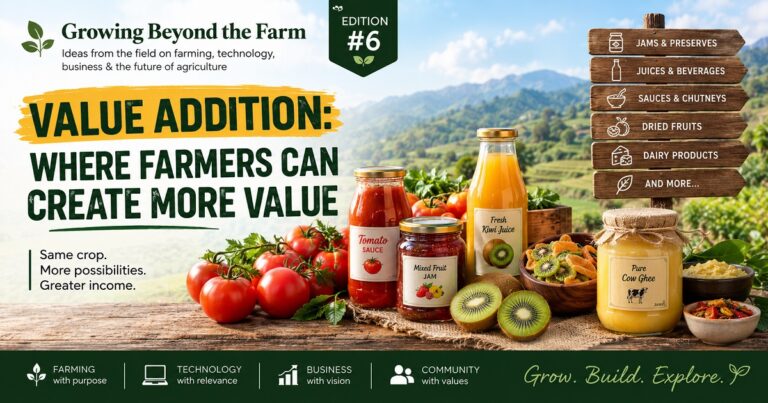
I wrote about this in my earlier article, Value Addition: Where Farmers Can Create More Value.
The fundamental idea is simple:
The farm gate should not always be the end of the value chain.
Sometimes it should be the beginning.
And exports make this even more interesting because processed products can travel differently from fresh produce and may reach markets that would be difficult to serve with highly perishable crops.
APEDA’s data shows that processed fruits, juices and nuts alone generated about US$662.79 million in exports in 2025–26.
Natural and Organic Products Could Create Another Niche
There is also an interesting opportunity for farmers who are producing with natural, organic or sustainability-focused methods.
But I want to make one distinction clear.
Simply saying “naturally grown” does not automatically create an export product.
International buyers need evidence.
They may require certifications, testing, traceability and compliance with the regulations of the destination market.
For certified organic products under India’s National Programme for Organic Production, APEDA reports that India exported organic products worth approximately US$665.97 million in 2024–25. Fresh fruits and vegetables accounted for about US$9.20 million of that total.
The number for organic fresh fruits and vegetables is relatively small compared with the broader fresh-produce market.
To me, that doesn’t mean the opportunity is absent.
It means there is still plenty of work to do.
Farmers need to understand the difference between:
a farming practice
and
a marketable, verifiable claim.
That distinction becomes extremely important when selling to international customers.
Export Markets Demand Consistency
One of the hardest lessons in agriculture is that producing a great crop once is not the same as building a business.
Imagine an overseas buyer likes your produce.
They place another order.
Can you supply the same quality again?
And again?
And again?
That is where consistency becomes more valuable than one exceptionally good harvest.
A buyer may prefer a producer who supplies slightly less volume but maintains:
- predictable quality
- reliable delivery
- consistent grading
- proper packaging
- accurate documentation
- clear communication
over a producer who sends an excellent shipment one time and an inconsistent shipment the next.
This is why I believe branding, systems and farming practices have to come together.
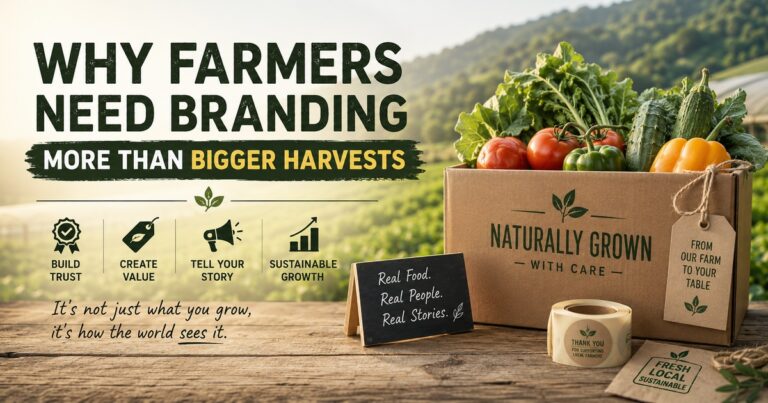
I have previously written about why I think farmers need branding rather than simply chasing bigger harvests. You can read that article here: Why Farmers Need Branding More Than Bigger Harvests.
The same principle applies to exports.
A brand is ultimately a promise.
And export markets test whether you can keep that promise.
Traceability Will Become More Important
One of the biggest changes in agriculture is the growing importance of knowing where food came from.
Consumers and buyers increasingly want information about:
- farm origin
- production practices
- pesticide use
- harvesting
- processing
- packing
- transportation
Traceability isn’t simply a fancy technology feature.
It can become part of the product’s value.
For example, if I tell a customer that a particular batch of kiwi came from a particular region, farm or producer group, and I can actually support that claim with records, that creates a different level of trust.
This is particularly important for export markets.
APEDA’s recent notices show how market access can involve phytosanitary requirements, sampling, analysis and traceability measures for particular crops and destinations. For example, recent 2026 notices address requirements for grapes entering Vietnam, certain Indian fruits and vegetables entering Canada, and monitoring and traceability for green chilli and drumstick exports to the EU.
This is why I believe digital agriculture and exports will increasingly overlap.
A farmer who maintains good digital records today may have an advantage tomorrow.
Technology Can Help Small Farmers Become More Export-Ready
Technology doesn’t necessarily mean buying expensive machines.
Sometimes it simply means organising information better.
Imagine a farmer group maintaining digital records of:
- farmer details
- field locations
- crop varieties
- planting dates
- input applications
- harvest dates
- quantities
- grading
- batch numbers
- packing details
- buyer orders
That information can make the supply chain much more transparent.
AI could eventually help with demand forecasting, crop planning, quality assessment and market intelligence.
Digital marketplaces can help connect producers with buyers.
Weather technology can help farmers plan production.
IoT sensors can help monitor environmental conditions.
And simple mobile applications can make record keeping much easier.
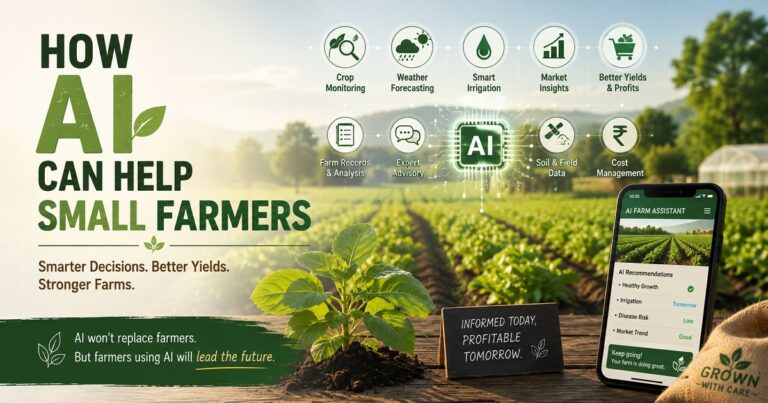
I have written more about this in How AI Can Help Small Farmers.
My interest in technology has made me look at farming differently.
I don’t see technology as something that replaces the farmer.
I see it as something that can help the farmer make better decisions.
And exports are an area where better information can have a very practical value.
Don’t Start With “Which Country Should I Export To?”
If I were advising a farmer who wanted to explore exports, I would actually suggest starting somewhere else.
Don’t begin with:
“Which country should I export to?”
Begin with:
“What product can I consistently produce that somebody outside India is willing to pay for?”
Then work backwards.
Ask:
- What product do I have?
- What variety or specification is required?
- What volume can I reliably supply?
- What markets already import this product?
- What quality standards apply?
- What packaging is required?
- What certifications may be required?
- What are the logistics costs?
- What is the expected selling price?
- Who will handle export documentation?
- What happens if the shipment is rejected or delayed?
- What margin remains after all costs?
This approach is much more realistic.
Exporting should not begin with a dream of foreign currency.
It should begin with unit economics.
The Price in the Foreign Market Is Not Your Profit
This is another area where farmers need to be careful.
Suppose a product sells for ₹500 per kg in another country.
That does not mean the farmer receives ₹500.
There can be costs for:
- sorting
- grading
- packaging
- local transportation
- cold chain
- testing
- documentation
- freight
- insurance
- customs-related processes
- commissions
- wastage
- financing
- importer/distributor margins
The farmer needs to understand the landed economics, not just the foreign retail price.
This is exactly the same lesson I learned from thinking about direct-to-consumer sales.
When I started thinking more seriously about selling produce directly, I realised that production is only one part of the business.
My article Selling Directly to Consumers Changed My Thinking talks about that experience.
Exports take this lesson to another level.
The longer the supply chain becomes, the more important it becomes to understand where money is actually being made and where it is being lost.
Farmers Should Not Think Only About Commodity Exports
There is a big difference between exporting a commodity and exporting a differentiated product.
For example:
Wheat is a commodity.
But a carefully positioned, processed, packaged food product with a story, quality specification and recognised brand is something different.
Similarly:
Fruit is a commodity.
But a consistent, traceable, properly graded and packaged premium fruit can occupy a different position.
This is why I believe Indian agriculture needs to move gradually from:
produce → trader
towards:
produce → quality → processing → branding → market
Not every farmer needs to control every stage.
But farmer organisations and agricultural businesses can capture more value by participating in more of the chain.
Himalayan Agriculture Has Its Own Export Story
Coming from Himachal Pradesh and working with kiwi and other crops, I naturally think about this from a mountain farming perspective.
The Himalayas cannot compete with every agricultural region on volume.
And I don’t think they should try.
The better opportunity may be to compete on identity, quality, origin and differentiation.
A mountain-grown product can potentially tell a very different story from a mass-produced commodity.
But a story alone isn’t enough.
The product still needs:
- consistent quality
- proper grading
- reliable packaging
- food safety
- traceability
- dependable supply
- a market willing to pay for the difference
That is the part that interests me.
How can the unique characteristics of a place become part of a viable agricultural business?
That is a much more interesting question than simply asking how to produce more.
Exports Could Also Change How Farmers Think About Quality
For years, farmers have often had to produce according to what the local market will accept.
But international markets can force a different discipline.
If a buyer specifies a particular size, maturity, appearance or quality level, the farmer has to plan production accordingly.
That could influence everything from:
- variety selection
- orchard management
- crop protection
- harvesting
- sorting
- packaging
In other words, the market can influence farming decisions before the crop is even planted.
This is a powerful shift.
Instead of:
Grow → harvest → find buyer
we can increasingly think:
Identify market → understand requirements → plan production → harvest to specification → deliver consistently.
That is closer to how a modern agricultural business operates.
The Role of Farmer Producer Companies Could Become Much Bigger
I see enormous potential here.
Suppose an individual farmer has 2 acres.
It is difficult for that farmer to negotiate with a large overseas buyer.
But imagine 200 farmers organised around the same crop and region.
Suddenly, they have:
- volume
- collective bargaining power
- shared infrastructure
- common quality standards
- a stronger negotiating position
- better ability to hire professional staff
The FPC doesn’t have to own every farm.
It can become the organisation that connects farms to markets.
This is one reason I believe the future of agricultural business will involve much more collaboration between farmers, FPCs, exporters, processors, technology companies and logistics providers.
No single farmer needs to build the entire system.
The ecosystem can build it together.
But Farmers Should Not Rush Into Exporting
There is another side to this discussion.
I don’t think every farmer should immediately start exporting.
Exports are not automatically more profitable.
Sometimes the domestic market may actually offer better returns.
Sometimes transportation costs make exports uneconomical.
Sometimes a crop is too perishable.
Sometimes regulatory requirements are too demanding.
Sometimes the quantity available is simply too small.
And sometimes a farmer has a much better opportunity by selling directly to consumers within India.
That is why I don’t see exports as a replacement for domestic markets.
I see them as another market channel.
A smart agricultural business should ideally have multiple options.
Local market.
Wholesale.
Direct-to-consumer.
Processing.
Institutional buyers.
And, where practical, exports.
The ability to choose between markets can itself become a competitive advantage.
What I Think Indian Farmers Need to Learn Before Exporting
If more farmers want to participate in exports, I think agricultural education needs to expand beyond production.
Farmers should learn at least the basics of:
1. Market research
Know who buys your product and why.
2. Costing
Understand your actual cost per kilogram, including post-harvest expenses.
3. Quality standards
Know what specifications your target market requires.
4. Packaging
Learn how packaging affects shelf life, appearance and transportation.
5. Documentation
Understand the basic export process and the role of different parties.
6. Food safety
International markets can have strict requirements.
7. Digital technology
Use digital tools for records, communication and market intelligence.
8. Branding
Don’t underestimate the value of origin and reputation.
9. Negotiation
A farmer who cannot negotiate may still remain a price taker.
10. Relationships
Export businesses are built on reliability and trust.
These are not necessarily traditional farming skills.
But they are becoming agricultural business skills.
We Also Need Better Agricultural Entrepreneurs
One thing I have increasingly come to believe is that India’s agriculture sector doesn’t just need more farmers.
It needs more agricultural entrepreneurs.
People who understand both sides.
Someone who understands what happens in the field but can also understand:
- markets
- technology
- logistics
- finance
- branding
- processing
- exports
That person could be a farmer.
It could be a young person from a farming family.
It could be an FPC manager.
It could be a food entrepreneur.
It could even be a technology entrepreneur building solutions for agriculture.
The boundaries are becoming less rigid.
And I think that’s a good thing.
What Would Make Indian Agriculture More Competitive Globally?
For me, the answer is not simply higher production.
It is a combination of several things:
Better production
- better post-harvest management
- better quality
- better infrastructure
- better processing
- better branding
- better technology
- better market access
- better farmer organisation
That combination is much more powerful than any one intervention by itself.
APEDA itself describes value addition, processing, technology, infrastructure and improved post-harvest management as important elements in making agricultural exports more competitive and improving farmer realisation.
That is the direction I think Indian agriculture needs to move in.
My View: The Farmer of the Future May Think Much Bigger
I don’t think the farmer of the future will necessarily look like the traditional image of a farmer.
He or she may still spend most of the day working with soil, plants and animals.
But they may also spend time looking at a phone dashboard, talking to customers, checking weather data, analysing market prices, managing an FPC, discussing packaging with a processor or negotiating with a buyer.
The farm may remain physical.
But the business around the farm will become increasingly digital.
And that’s where my own interests in agriculture and technology come together.
I enjoy farming, but I also enjoy understanding technology and business.
For me, these aren’t separate worlds.
They can work together.
So, Can Indian Farmers Build Bigger Businesses Through Exports?
Yes – but not simply by producing more.
The bigger opportunity is to produce what the market wants, at the quality it expects, and then capture more of the value between the farm and the final customer.
India already has a substantial agricultural export base.
Fresh fruits and vegetables are being exported at scale. Processed foods are reaching international markets. Organic products have established export channels. FPOs and FPCs are getting more opportunities to connect with exporters. Technology is making traceability and market access easier.
The foundation is already there.
But I think the next stage will require farmers to become more business-minded.
Not every farmer needs to become an exporter.
Not every crop needs to be exported.
And not every foreign market will be profitable.
But more farmers should at least understand the possibility.
Because when a farmer has only one market, the farmer has limited choices.
When a farmer can access several markets, the bargaining position changes.
And when farmers organise themselves, add value, build brands and understand technology, they can potentially move from being simply producers of agricultural commodities to becoming owners of agricultural businesses.
That, to me, is the more exciting future for Indian farming.
We don’t necessarily need to leave the farm to build a bigger business.
Sometimes, we simply need to think beyond the farm gate.
Related Reading
If you’re interested in how I think about the business side of farming, these are closely connected to this article: