10 Things I Wish I Knew Before Starting a Kiwi Orchard
When people think about starting a kiwi orchard, they often imagine green vines, healthy fruit hanging from branches, and the possibility of earning a good income from a high-value crop.
It is an attractive idea, particularly in the hills of Himachal Pradesh, where kiwi cultivation offers farmers an opportunity to diversify beyond traditional crops.
But there is another side to establishing an orchard.
Before a kiwi vine produces fruit worth selling, a farmer must make several decisions that can affect the orchard for years. The location, planting material, support structure, pollination, water management, pruning, and eventual marketing all influence the outcome. Some decisions are relatively easy to change. Others become expensive mistakes once the orchard is established.
As a kiwi grower in Himachal Pradesh, I have come to appreciate that growing fruit is only one part of the bigger picture. An orchard is a long-term commitment, and the decisions made before planting can be just as important as the work done afterward.
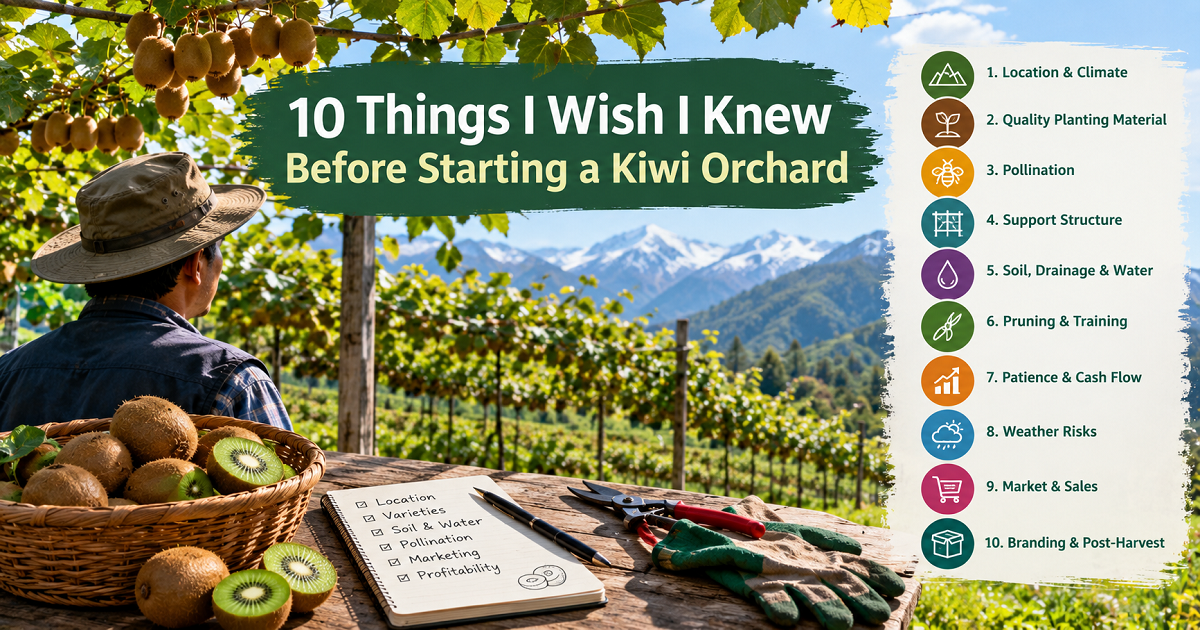
If I were starting a kiwi orchard again, these are ten things I would pay much closer attention to.
1. I Would Study the Location Before Buying the Plants
One of the first things I would do differently is spend more time understanding the land and its suitability for kiwi cultivation.
It is tempting to assume that because kiwi grows successfully in Himachal Pradesh, it should grow well everywhere in the state. But Himachal has considerable variation in altitude, temperature, rainfall, soil, and exposure to frost.
Even two farms in the same general region can have different growing conditions.
Kiwi generally prefers a temperate climate, sufficient winter chilling, well-drained soil, and reliable moisture during active growth. In Himachal Pradesh, the mid-hill region is an important area for its cultivation, but the suitability of an individual site still needs to be assessed.
The Himachal Pradesh horticulture guidance discusses climate, soil, and other requirements for kiwi cultivation.
Before planting, I would examine several things.
Altitude and winter conditions: Is the location suitable for the selected variety? Does it receive the winter chilling that the vines need?
Frost risk: Is the land exposed to damaging spring frost when new shoots and flowers are developing? A site that looks ideal in summer may behave very differently during spring.
Sunlight and wind: Does the orchard receive adequate sunlight? Is it exposed to strong winds that could damage vines, shoots, or the support system?
Soil drainage: Does water drain away after heavy rainfall, or does the land remain saturated?
Water availability: Can I provide irrigation when rainfall is insufficient, particularly during dry periods?
I would also observe the site across different seasons rather than judging it during a single visit.
A small amount of research before planting can prevent years of frustration. If I had doubts about the land, I would consult the local horticulture department or a qualified horticulture expert before making a major investment.
The important lesson is simple: choose the location for the crop you want to grow, not just because the land is available.
2. I Would Never Compromise on Planting Material
The second lesson is to be careful about where the plants come from.
When establishing an orchard, farmers naturally look at the price of saplings. If one nursery offers plants at a lower price than another, the cheaper option can seem attractive, especially when dozens or hundreds of plants are required.
But the purchase price is only a small part of the long-term cost of an orchard.
Poor-quality planting material can create problems that continue for years. Plants may be incorrectly labelled, weak, unhealthy, or unsuitable for the local climate. If the variety does not perform as expected, replacing the vines later can mean losing valuable growing time.
I would therefore look for reliable planting material from a reputable nursery and verify the variety before buying.
I would ask:
- Is the variety correctly identified?
- Is the plant propagated through a reliable method?
- Is the nursery able to explain the variety’s suitability for my region?
- Is the plant healthy, with a good root system and no obvious signs of damage?
- Can I obtain replacement plants if there is a genuine problem with the supplied material?
I would also avoid buying plants simply because another farmer has had success with them somewhere else. A variety that performs well under one set of conditions may not be the best choice for another location.
The same applies to advice from sellers. A nursery may know its plants, but I would still cross-check its recommendations with local horticultural guidance.
An orchard is a long-term investment. Saving a little money at the beginning is not worth the risk of establishing it with unsuitable plants.
3. I Would Understand Pollination Before Planting
This is one of the most important things to understand before establishing a conventional kiwi orchard.
Kiwi plants are generally dioecious, which means male and female flowers grow on separate plants. Female vines produce fruit, while male vines provide pollen for pollination.
In practical terms, planting only female vines is not enough.
The orchard needs suitable male polliniser plants, and their flowering periods must overlap with those of the female varieties. The exact combination matters because a male plant that flowers at the wrong time may not provide effective pollination when it is needed.
A commonly recommended starting point is approximately one male plant for every eight female plants, although the appropriate arrangement depends on the varieties, orchard design, and local recommendations.
The male plants must also be distributed appropriately throughout the orchard. Simply having a male vine somewhere on the property does not automatically guarantee good pollination across every row.
Before planting, I would confirm:
- Which female variety is suitable for the site?
- Which male variety flowers at the right time?
- How many male plants are required?
- Where should those plants be positioned?
- Are there any additional pollination challenges in the local conditions?
Pollination also depends on conditions during flowering and the activity of pollinating insects. If fruit set is poor, the problem may not be related to the health of the vines alone.
The Indian Council of Agricultural Research’s discussion of kiwi production technologies covers pollination management, vine training, pruning, and water requirements.
I would rather spend time planning pollination before planting than try to correct a poorly designed orchard after the vines have matured.
4. I Would Budget for the Support Structure From Day One
A kiwi orchard is not simply a collection of plants growing in the ground.
Kiwi vines are vigorous climbers, and a productive orchard requires a properly designed support system. Depending on the training method, this may involve strong posts, wires, anchors, and a carefully planned layout.
This is an expense that can be underestimated when calculating the initial investment.
A farmer might calculate the cost of saplings, planting pits, manure, and labour, then assume that most of the investment is covered. But the support structure can represent a substantial additional cost.
It is also not something to treat as a temporary arrangement.
As the vines grow, the structure must support their weight, foliage, fruit, and the forces created by wind and weather. A weak or poorly constructed structure can become a serious problem as the orchard matures.
If I were planning a new orchard, I would estimate the complete cost before planting:
- Posts and their foundations.
- Wires, fittings, and anchoring.
- Labour for installation.
- Training and tying materials.
- Future repairs and maintenance.
I would also decide on the training system before finalising the spacing and layout.
A properly designed structure makes it easier to train vines, manage the canopy, prune branches, inspect the plants, and harvest fruit. It can also improve how efficiently the available orchard space is used.
The important point is that the structure is part of the orchard itself, not an optional addition to be arranged later.
5. I Would Pay More Attention to Soil, Drainage, and Water
Healthy vines begin with a suitable growing environment.
Kiwi requires adequate moisture, but that does not mean its roots should remain in waterlogged soil. Poor drainage can damage roots and create long-term plant health problems.
This is why I would pay close attention to soil conditions before planting.
A soil test can help establish the pH and identify nutrient-related concerns. I would also examine soil depth, texture, drainage, and the availability of organic matter.
Kiwi generally performs well in deep, well-drained soil. Heavy soil that stays wet for extended periods can be unsuitable unless the underlying drainage problem can be addressed effectively.
I would not assume that adding more manure or fertiliser could compensate for a poor site.
Water management matters throughout the season
Young vines need particular attention because their root systems are still developing. Established vines also require adequate moisture during active growth and fruit development.
Rainfall alone may not always meet the orchard’s needs. Dry spells can occur even in areas that receive substantial annual rainfall, so a dependable irrigation plan is valuable.
At the same time, excessive watering can be harmful where drainage is inadequate.
Rather than following a rigid watering schedule without considering conditions, I would pay attention to soil moisture, rainfall, plant growth, and the season.
Natural farming still requires careful observation
My interest in natural farming has reinforced the importance of understanding the soil rather than treating it simply as a medium for holding plants.
Organic matter, ground cover, responsible nutrient management, and avoiding unnecessary disturbance can all be useful parts of a soil-management approach. But natural farming does not eliminate the need to understand nutrient requirements or correct genuine deficiencies.
I would observe how the soil responds over time and use appropriate testing where needed.
For me, the lesson is that healthy soil is not something to think about only when a plant starts showing symptoms. It should be part of the orchard plan from the beginning.
I have written more about this approach in Why I Chose Natural Farming.
6. I Would Learn Pruning and Training Early
Planting the vines is only the beginning. Their growth needs to be guided.
Kiwi vines can produce extensive growth, but allowing them to grow without a clear training and pruning plan can make orchard management difficult. The canopy can become crowded, access can be restricted, and fruiting wood may not be managed effectively.
Pruning is not simply about cutting away excess branches. It is about maintaining a balance between vegetative growth and fruit production.
The training system determines how the main leaders and fruiting branches are arranged along the support structure. Winter pruning and summer pruning have different purposes and should be carried out according to the plant’s stage of development and local recommendations.
I would learn the basics before the vines became large enough for mistakes to be costly.
That means understanding:
- How to establish the main trunk and permanent leaders.
- Which branches should be retained for future fruiting.
- How to manage the previous season’s growth.
- When to remove damaged, crowded, or unproductive wood.
- How to maintain airflow and light within the canopy.
- How pruning requirements change as the vine matures.
I would also ask an experienced kiwi grower or horticulture specialist to demonstrate the process in a real orchard.
Reading about pruning is useful, but seeing how a trained vine is managed makes the principles much easier to understand.
One mistake I would avoid is copying a pruning method from a video without considering the variety, season, and growth stage of my own vines.
Good pruning is a skill that develops with observation and practice. I would begin learning it in the first year rather than waiting until the orchard became difficult to manage.
7. I Would Be Patient About Returns and Plan for the Early Years
An orchard is a long-term investment, not a quick-income project.
This is easy to overlook when the decision is based mainly on the potential selling price of the fruit.
Kiwi vines may begin producing some fruit after a few years, but the first crop should not automatically be treated as a commercially meaningful harvest. The time required to reach a useful level of production depends on the planting material, growing conditions, management, and the health of the vines.
For planning purposes, I would prepare for several years of establishment before relying on the orchard for substantial income.
That means separating two questions:
- When might the vines begin producing fruit?
- When might the orchard generate enough saleable fruit to justify its costs?
These are not the same question.
A few fruits on young vines do not necessarily mean the orchard is commercially productive. Fruit quality, size, consistency, and the amount that can actually be sold all matter.
Calculate costs beyond planting
Before starting again, I would prepare a year-by-year budget that includes:
- Land preparation and planting.
- Saplings and the support structure.
- Labour for training and pruning.
- Irrigation and water management.
- Soil testing and nutrient management.
- Maintenance and repairs.
- Harvesting, grading, packing, and transport.
I would also allow for unexpected expenses and the possibility that production may be lower than anticipated.
Most importantly, I would not calculate profit using an assumed yield multiplied by an attractive market price. That is a revenue estimate, not a complete business plan.
Actual profitability depends on the quantity of fruit that meets buyers’ requirements, the price received, the costs of getting the fruit to market, and the losses incurred along the way.
My view is that an orchard should be planned around realistic cash flow rather than optimistic expectations.
The same principle applies to farming more broadly. In Farming: The Best Business, I explore why farming needs to be approached as a business as well as a production activity.
8. I Would Prepare for Weather Challenges, Not Just Ideal Growing Conditions
A plan that works during a good season may not be enough to protect an orchard during a difficult one.
In the hills, weather can influence several stages of kiwi production. Spring frost can damage tender new growth and flowers. Strong winds can damage shoots or put pressure on the support structure. Heavy rainfall can create drainage problems, while dry spells can increase the need for irrigation.
The effects depend on the location, timing, severity, and stage of plant development.
This is why I would pay more attention to the risks specific to my own orchard rather than assuming that general regional conditions tell the whole story.
Observe the orchard across seasons
I would maintain simple records of:
- Unusual temperature changes and frost events.
- Flowering dates and weather during flowering.
- Rainfall and irrigation.
- Periods of excessive moisture or drought.
- Visible damage to shoots, leaves, and fruit.
- Changes in growth from one season to the next.
These observations can help identify recurring problems and support better decisions in future seasons.
Where appropriate, I would also explore practical protection measures, such as improving drainage, strengthening the support structure, or using suitable frost-protection methods recommended by local experts.
Not every weather risk can be eliminated, and some protective measures may not be economically justified on every farm. The objective is to understand the risks early enough to make informed decisions.
I would also avoid treating one successful season as proof that the orchard will perform identically every year.
Agriculture requires adaptation. A good farmer learns to respond to conditions rather than expecting conditions to follow the plan.
9. I Would Plan the Market Before the First Commercial Harvest
This is one of the biggest lessons I would want every prospective orchard owner to understand.
Growing a good crop and selling it profitably are two different jobs.
When someone considers planting kiwi, the first questions are often about the variety, yield, and expected price. But I would also want to know who might buy the fruit, what quality they expect, how it should be graded, and how it will reach them.
These questions should not wait until the orchard starts producing.
Understand the different ways to sell
Depending on the scale of the orchard and the local market, possible channels may include:
- Selling to fruit traders or wholesalers.
- Supplying retailers and fruit shops.
- Working with a farmer producer organisation or other growers.
- Selling directly to consumers.
- Developing relationships with restaurants or other business buyers.
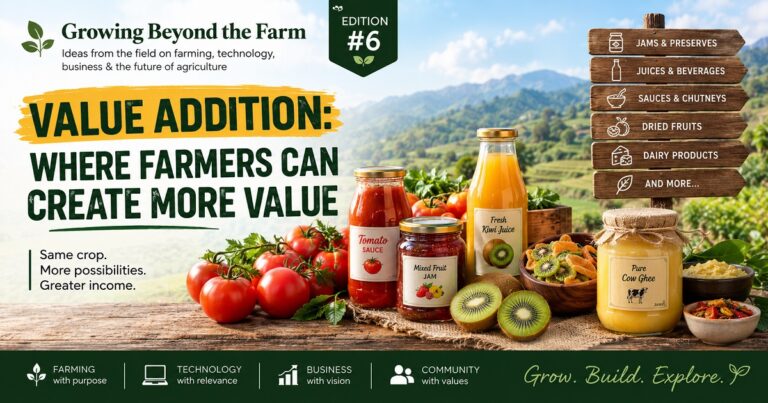
- Exploring suitable processing or value-addition opportunities.
Each channel has different requirements.
A wholesaler may be interested in volume, consistent quality, and convenient collection. A retailer may expect grading, attractive packaging, and dependable supply. Direct consumers may care about freshness, the story behind the farm, trust, and delivery.
None of these channels is automatically the best choice. The right approach depends on the volume available, operating costs, location, customer demand, and the farmer’s ability to manage sales and logistics.
Direct selling is not simply about getting a higher price
Selling directly to consumers can give farmers more control over customer relationships, but it also introduces additional responsibilities.
Orders need to be managed. Fruit must be selected and packed properly. Deliveries need to be coordinated, and customer complaints or delays must be handled.
Packaging and courier costs can reduce the apparent advantage of a higher selling price.
I have explored some of these challenges in Selling Directly to Consumers Changed My Thinking. The experience of selling produce has made me think beyond the farm gate and consider what happens after the crop leaves the orchard.
If I were establishing a kiwi orchard again, I would begin researching buyers well before the first meaningful harvest.
I would speak to traders, retailers, other growers, and potential customers. I would learn what fruit sizes and quality standards they prefer and what prices they actually pay for different grades.
I would also consider how I could sell lower grades without pretending that every fruit belongs in the premium category.
The goal would be to build a realistic marketing plan before I had a large volume of fruit that needed to be sold quickly.
10. I Would Treat Branding, Post-Harvest Handling, and Records as Part of Farming
The final lesson brings together several things that are easy to treat as secondary activities.
An orchard produces a crop, but a farming business must turn that crop into a saleable product and manage the money that comes from selling it.
That involves much more than growing fruit.
Post-harvest handling can protect the value of the crop
After harvest, kiwi needs appropriate handling, grading, packing, and storage for the intended market.
Fruit should be harvested at the right maturity and handled carefully to avoid unnecessary damage. Different buyers may have different requirements for size, appearance, maturity, packaging, and consistency.
I would learn these requirements in advance and arrange suitable packing materials and transport rather than improvising when harvest arrives.
I would also keep track of how much fruit falls into different grades and how much is damaged, rejected, or lost during handling.
That information helps reveal whether the biggest opportunity is improving production, fruit quality, packing, or the choice of market.
Branding is about trust, not just a logo
Farmers often spend years developing their orchards but give little thought to how customers will recognise and trust their produce.
Branding can begin with simple things: accurate information, consistent quality, clean packaging, clear communication, and dependable service.
A farm name and attractive label are useful only when the experience matches the promise.
For a kiwi grower, a clear identity can help communicate where the fruit comes from, how it is grown, and what customers can realistically expect. But claims about farming methods or product quality must be truthful and supportable.
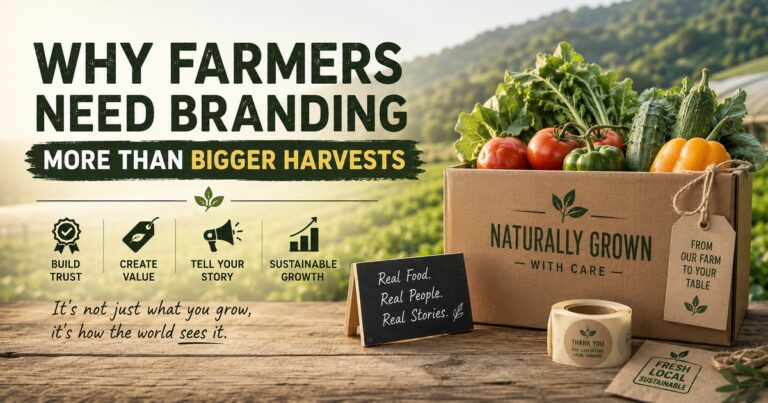
I have discussed this further in Why Farmers Need Branding.
Records help turn experience into better decisions
I would maintain basic records from the first year, including expenditure, labour, plant growth, inputs, irrigation, harvest quantities, grades, selling prices, and losses.
Without records, it is difficult to know whether an orchard is improving financially or simply producing more fruit at a higher cost.
Even a basic spreadsheet can help answer important questions:
- What does it cost to maintain each vine or unit of orchard area?
- How much saleable fruit does the orchard produce?
- Which grades generate the most revenue?
- Which customers or sales channels are most reliable?
- How much money remains after harvesting, packing, transport, and other costs?
Over time, these records can help guide decisions about investment, pruning, production, and marketing.
Technology can make this easier, but it does not need to be complicated. A simple record-keeping system that is updated regularly is more useful than an advanced tool that nobody uses.
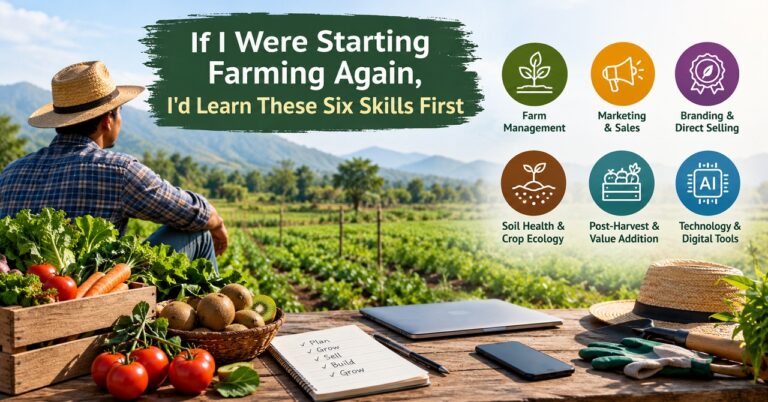
For farmers interested in using technology in practical ways, I have also written about How AI Can Help Small Farmers.
What I Would Do Differently Before Planting My Next Kiwi Orchard
Looking back at these ten lessons, I would approach orchard establishment as a sequence of decisions rather than rushing to get plants into the ground.
First, I would assess the site, soil, climate, water availability, and frost risk. Then I would confirm the varieties, planting material, and pollination plan with reliable local guidance.
Next, I would prepare a realistic budget that included the support structure, irrigation, maintenance, labour, and the years required before meaningful commercial production.
At the same time, I would begin learning about pruning, fruit quality, post-harvest handling, and the markets I intended to serve.
I would also start keeping records from the beginning. Those records would help me understand what was working, what needed improvement, and where money was actually being spent.
Most importantly, I would avoid making decisions based only on the best-case scenario.
A successful orchard is not built on the assumption that every season will be favourable, every vine will perform perfectly, or every kilogram of fruit will sell at a premium price.
It is built through preparation, observation, practical knowledge, and the willingness to improve year after year.
Final Thoughts: An Orchard Is a Long-Term Commitment
Kiwi cultivation can offer opportunities for farmers in suitable parts of Himachal Pradesh, but it should not be treated as a guaranteed path to higher income.
The crop has its own requirements, and the economics depend on the site, planting material, orchard management, quality, production costs, and access to buyers.
If I were starting a kiwi orchard again, I would spend less time thinking only about how many plants I could establish and more time planning the complete system around them.
I would ask not only, “Can I grow kiwi here?” but also, “Can I manage this orchard properly, produce fruit that buyers want, and sell it at a price that makes the effort worthwhile?”
That second question is just as important as the first.
For anyone considering kiwi cultivation, my advice is to learn from experienced local growers, consult the horticulture department, understand the requirements of your specific location, and prepare a realistic business plan before investing heavily.
And remember: the goal is not simply to establish an orchard. It is to build one that you can manage sustainably and turn into a viable farming business over the long term.